Choose one song you want to remember today
From the songs you actually heard today, choose one that brings a scene to mind. Add the track and artist names as far as you know them, with checked details if you need to distinguish a version or another song with the same title. If the name is uncertain, leave it to check rather than inventing one.
You do not have to count plays or rank favorites. You do not need to write about a song every day, either. Instead of copying a whole playlist, begin with why you want to write about this particular track today.
Connect a song with a scene from your life
Choose a song you actually heard and write the title, artist, and other names you have checked.
Describe when and where you heard it and what you were doing, using the scene you remember directly.
Add why the song connects with that day in your own words, without quoting lyrics.
If a later listen brings a new memory, link back to the earlier note in an entry for that later date.
Describe where you were and what you were doing
In this fictional editorial example, “Track A” is a placeholder rather than a real song: “I listened to Track A while clearing the dinner table. Before closing the window, I saw the lights come on down the street.” One small scene connects the listening with the day around it.
Instead of declaring “This is a summer song,” you could describe which summer it recalls for you. If the association arises afterward, say “Hearing it now brings back last summer’s evenings.” Do not rewrite that later connection as something you were already thinking at the time.
Keep the reason for your connection beside the track
The fictional note could continue “I chose this song again because it reminds me of that slow evening clearing the table.” You do not need to analyze its tempo or name the instruments accurately. Leave what you heard in your own terms without deciding that the artist intended the same meaning.
You can write without copying lyrics or attaching an audio file. If musical terminology does not come to mind, return to what you were doing and what you remember. Do not add a claim that music changed your state of mind or produced a particular emotional effect.
Let the same song belong to a different scene later
If you hear the song on a walk months later, record that path and your present thoughts on the new date. Previously it might have recalled an evening indoors; this time a tree along the way may stay with you. Several scenes can belong to one track without the new reaction replacing the first.
Put the song name beside a scene clue such as “Dinner table” or “Autumn walk” in the title to distinguish the entries. Instead of merging every day into one reaction because the track is the same, preserve which experience each note describes. Leave the first time you heard it unknown if you cannot remember.
Use your own pictures and enter the music details yourself
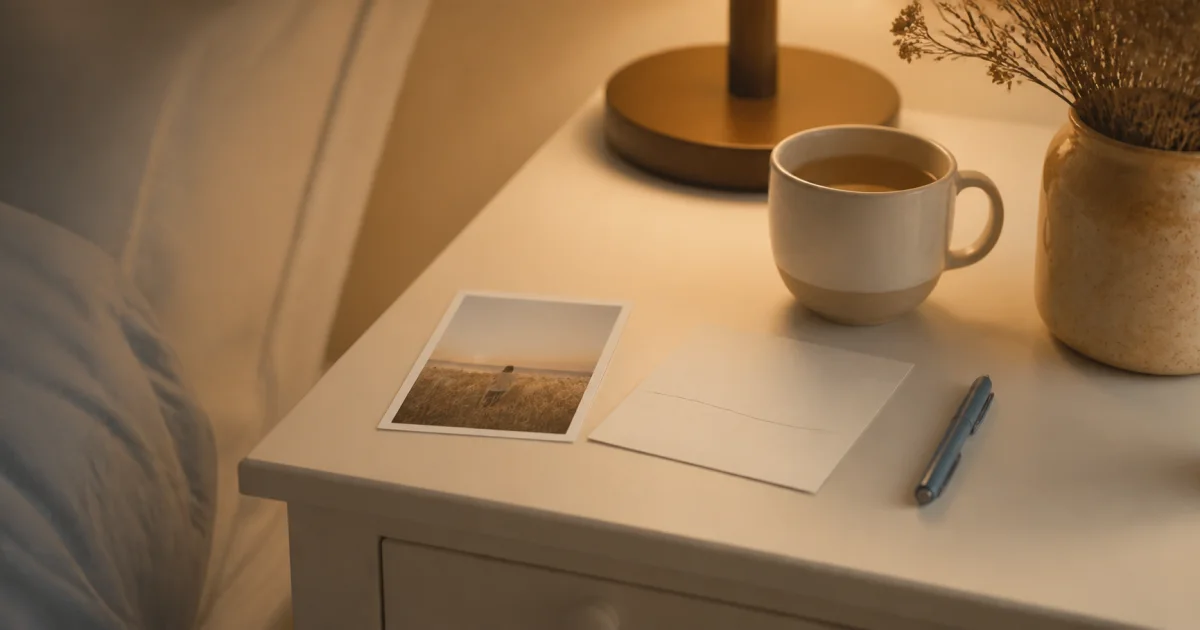
In Pogaem, keep a picture from your day with a note in which you type the song name and scene. If there is no picture, write without one. Album artwork and player screenshots are not required; before including a screen with someone else’s account information, consider whether the image is needed at all.
Pogaem is not listening to recognize the song, filling in its name, playing music, or importing a playlist. You write the music details and personal connection yourself. For the order of songs at a concert or the work you did during instrument practice, turn to the related guides with those different purposes.
Frequently asked questions
Can I write if I do not remember the song title?
Record the scene and say that the title is unconfirmed. Add the information after checking it rather than making up a title or artist.
Do I need lyrics or an audio file for a music journal?
No. Write the checked song name, your own scene, and your thoughts. This method does not depend on copying lyrics or on audio-upload or playback features.
Can I write about the same track again?
Yes. Make a new entry for a scene or thought that arose while hearing it on another day. If your reaction has changed, keep clear which time each perspective belongs to.