Identify the passage as well as the piece
Start a music practice journal with the piece, the score you used, and the passage you actually worked on. Practicing a familiar piece does not mean playing it from beginning to end every time. Add the edition or arrangement, page, and measures so you can find the same section later. Without measure numbers, a location such as ‘first line on page two’ can still be clear to you.
Record the part as well: perhaps you worked only on the left hand in a piano piece, or on one accompaniment section for guitar. The reference matters because identical measure numbers in different arrangements need not identify the same music. This is a personal record for reconstructing the scope of a session. It is not a lesson in how to perform the passage or a prescribed practice routine.
Write the goal and actual attempt as different statements
An editorial example of a note format is ‘Scope: measures 9–12, left hand, in my score / task: check the connection / actual attempt: played measures 9–10 separately; later passage not attempted.’ The numbers and task illustrate documentation, rather than a recommended exercise. A planned passage should not become completed work just because it appears in the goal. Keep the difference visible when you return to the entry.
If you record a tempo, distinguish a metronome setting you actually used from a number remembered afterward. If you did not count repetitions, there is no need to invent a count. Even ‘still confusing’ becomes more useful with a location: which connection made you stop? That gives the next session a passage to open instead of an unsupported judgment about the entire piece or your overall ability.
Leave a photo and note for one practice session
Use the actual practice date. Identify the piece, score edition, measures or page, and part as far as you can verify them.
Separate the task you planned from the passage you actually tried. Add equipment settings you used where relevant.
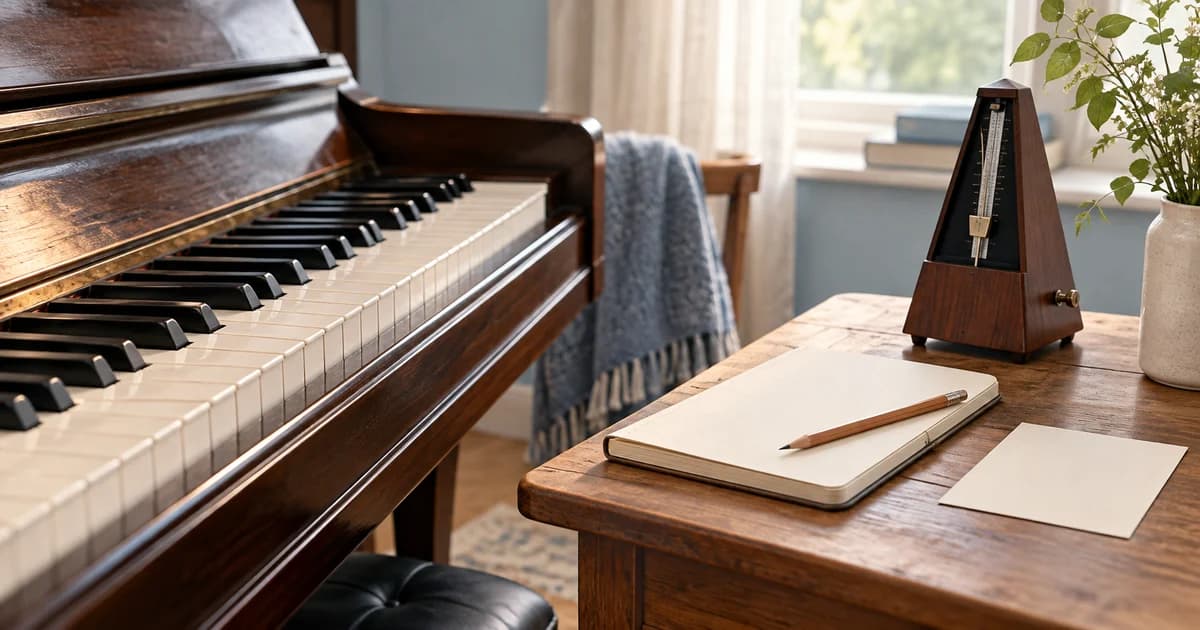
Include your own written practice notes or a photo around your instrument, with a short explanation of what it shows.
Leave the first location to reopen and a question to check next time. Continue with a new dated entry for the next session.
Distinguish a teacher's advice from your own judgment
When keeping advice from a lesson, note when you heard it, who gave it, and the passage it concerned. If you cannot remember the exact words, label your note ‘my understanding of the advice’ rather than inventing a quotation. Keeping your interpretation distinct from a teacher's confirmed assessment also leaves something concrete to ask about during the next lesson, especially if the instruction is still unclear to you.
Your listening impressions can remain personal observations too. ‘To my ear, the two notes sounded disconnected’ describes what you noticed; it does not establish a diagnosis about posture or physical technique. A photo note cannot replace appropriate guidance when a question involves pain or performance technique. You can record the question and the source of any advice without presenting your journal as an expert assessment of the cause.
Choose your own notes and practice scene over a whole score
A photograph cannot establish the accuracy of pitch or rhythm. Choose a scene that recalls the session, such as the instrument and your own notebook, then explain the practiced passage in text. You do not need to photograph the complete score or borrow someone else's performance screen to make the entry feel substantial. The image is a memory cue; the written location supplies information the scene cannot show.
Before sharing photos of sheet music or lesson materials outside your private record, check their usage terms and any other person's consent. Even a personal photo need not include unrelated names or contact details. Keep the purpose of the image clear when using Pogaem: saving practice scenes and notes does not imply that the app analyzes pitch, rhythm, playing technique, or musical ability from those photographs.
Resume from the actual stopping point rather than the old goal
If the previous goal ended at measure 12 but you actually stopped at measure 10, let the next starting point reflect that difference. When switching editions or arrangements, establish the new reference rather than transferring measure numbers unquestioningly. After a long break, begin with what you check today. You do not have to fill the gap by writing as though every earlier goal was completed while it went unrecorded.
Consistent piece names and passage labels in Pogaem's dated entries can help you read the context of your own sessions. This journal is not an attendance streak or a score for improvement. Its job is smaller: show you what to open and which question remains. A short session note has done that job when you can find the passage and understand the attempt, even if no goal was finished that day.
Frequently asked questions
Can I record only how long I practiced?
Time is optional. This method prioritizes the piece, score reference, measures or passage, part, and actual attempt so you know what to open when you return.
What should I write if I did not finish the planned passage?
Record the planned scope and the part you actually played separately. Leave unattempted work uncompleted, and note the location to check first next time.
Can photos show whether my playing has improved?
Photos preserve practice scenes and written notes. They do not automatically evaluate sound, rhythm, or technique. Keep your own impressions distinct from advice or feedback received through instruction.