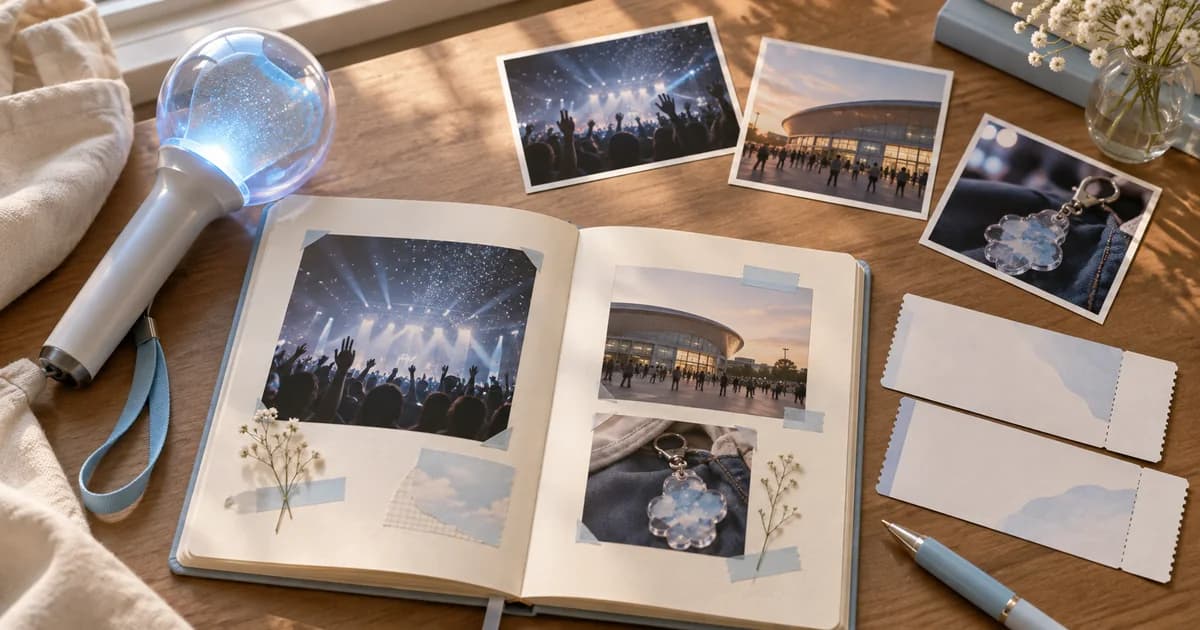
Identify the particular show beneath the tour name
A tour name may cover different dates or afternoon and evening performances with different songs. Begin with the artist, show name, date and venue you attended, and the particular performance if there was more than one. Keep a pre-show or expected list separate from what you actually heard. Another night's order can be useful context without becoming the confirmed sequence of your own show.
If a ticket or venue photo is your reference, check which performance it represents. Saving that picture later does not change the concert date. If you are unsure of a new song's title, describe a recognizable moment without inventing a title for it. The identifying details should point back to the event you are recording, rather than quietly combining material from several stops on the tour.
Remembering a song is different from confirming its position
An invented editorial example is “Opening: remember Song A / middle: order unconfirmed / final main-set song: Song C / encore: Song D.” These letters are fictional placeholders, not titles of real works. If you also remember hearing Song B but do not know where it fitted, keep it on a separate line. You can preserve that memory without placing it in a guessed position.
When you find a list later, record whether it came from the artist or organizer, or from another attendee, along with the date you checked it. Even an official document may be a planned list rather than a record of the completed performance. Add “Checked later from this source” where appropriate. The external list should remain distinguishable from something you personally remembered after the concert.
Keep the sequence of one performance in four steps
Identify the artist, concert date, venue, and specific performance, checking that saved references belong to it.
Write the songs and scenes you remember, joining only the parts whose order you know.
Distinguish medleys, the main set, encores, and any return of a song already heard.
Label information checked against an outside list with its source and checking date, leaving unresolved gaps visible.
Describe medleys and encores within what you could distinguish
If portions of several songs flowed together, you might write “Within the medley: part of A, then part of B.” Do not count that as hearing every song in full. If you could not identify the exact boundaries, describe a connected section and leave its classification uncertain. The diary can reflect the part you recognized without presenting a complete technical breakdown of the performance.
If a song returned near the end, retain “A appeared again” rather than deleting it as a duplicate. Say whether it belonged to the main set or an encore only as far as you confirmed. A short audience singalong and a song performed from the stage can also be different moments. Where that distinction matters to your memory, explain it instead of making both entries appear identical.
Add a scene that belongs to that night
Song titles alone may make your entry look much like a list from a different date. Add a sentence in your own words about a lighting moment or audience reaction you associate with one song. Keep a thought written after the concert distinguishable from a note made at the time. Both can bring you back to the scene, while preserving when you formed each impression.
You do not need a recording or a photograph of the whole performance to make this entry. If photography was not allowed, use text or your own pictures from before or after entry to the venue. Rather than copying lyrics or someone else's entire review, use song titles as clues for your own experience. A missing stage photo does not require filling the page with someone else's account.
Keep the show name and your notes together in Pogaem
Put the concert and performance in a Pogaem entry title, then write the musical sequence you could confirm in the body. If a companion agrees, a shared calendar lets you each add your own scenes and ask about an uncertain position in comments. Where recollections differ, preserve whose memory each version represents. You do not have to force agreement to keep both contributions understandable.
The song list and source details are notes you enter yourself. Pogaem does not listen to the performance, identify songs, import a setlist, or connect the entry to a music playlist. You can finish with a useful partial record: a sequence you checked, scenes you remember, and the questions that remain. A perfect-looking list is not necessary for the concert's place in your own diary.
Frequently asked questions
Must I complete the list if I cannot remember the middle?
No. Mark that section's order as unconfirmed and list remembered songs separately. If you later check material from the same performance, add the source and what it confirms.
Can I rely on a setlist I find online?
First check the date, venue, and specific performance, along with whether the source is an official release or another attendee's account. Distinguish a planned list from one checked after the show.
Can I make a concert entry without performance photos or video?
Yes. Write the songs and scenes in text. You may add your own before-and-after venue photos, describing them without implying they show the stage performance.