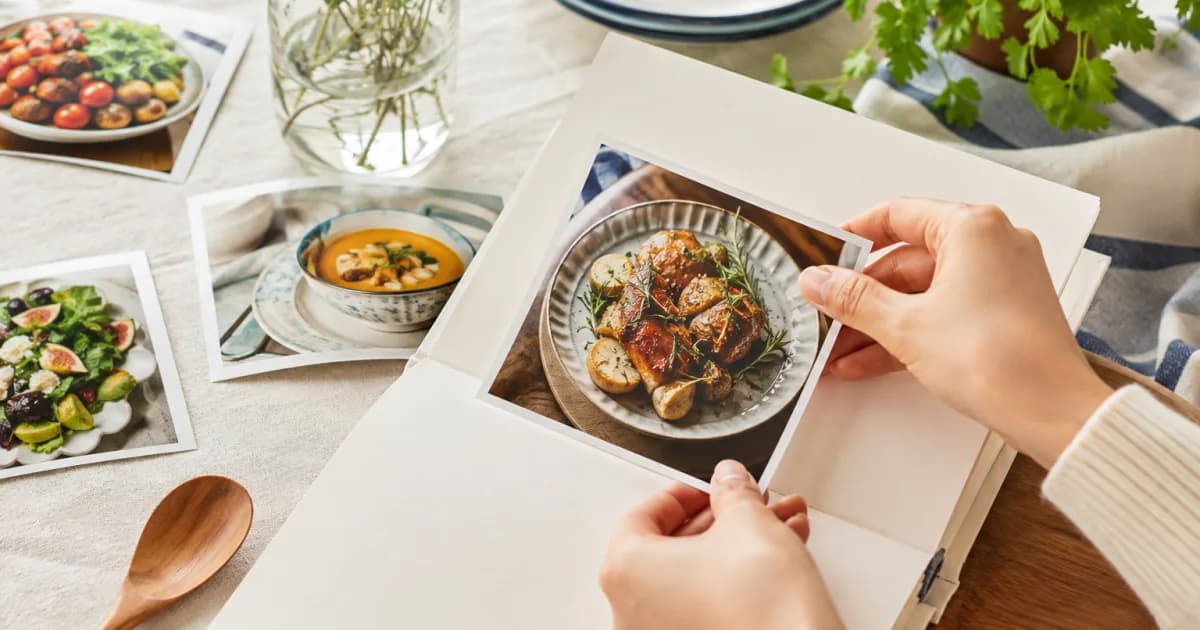
Start with what you ate, then decide what to make again
A meal plan lists what you intend to eat; a food journal records meals that have already happened. If you keep drawing a blank at lunchtime, try finding a meal you enjoyed last week before filling another planning sheet. A packed lunch, something from the work cafeteria, takeout on the way home, and a meal you cooked all belong in this record.
This guide is about organizing meal photos and your own notes. Pogaem does not calculate calories or nutrients from a food photo. If you need nutritional calculations, choose a tool designed for that purpose. Use your photo journal to remember the dish and the circumstances around it: what you ordered, what you had at home, or why it suited that particular day.
Give each photo a few useful clues
Take a photo that makes the meal recognizable, then note whichever details will help later: the meal, the dish, or something to change next time. Here is an editorial example: “Lunch · tofu rice bowl · adding the sauce just before eating worked well.” A small detail like that can bring the meal back without copying an entire recipe into your journal.
For food you bought, the reason you chose it may be the useful part. For example: “Dinner · sandwich from the station café · a quick stop before the train.” Record what you actually ate and keep your own impressions separate from facts on the packaging. There is no need to guess ingredients or nutritional information that you cannot confirm from the photo.
Add this week's first meal to Pogaem
Create a personal calendar with a name you will recognize later, such as “Meals at home” or “Lunch ideas.”
Add the photo to the date you ate the meal, and choose a representative photo that clearly shows the dish.
If you record several meals on one date, begin each note with breakfast, lunch, or dinner to tell them apart.
When adding a meal a few days later, select the day it happened and include only details you remember clearly.
At the weekend, choose one meal to have again
When you look back at the week, begin with a meal you would enjoy again instead of counting days without a photo. You might find a breakfast that was easy to put together, a dinner that used ingredients already in the fridge, or a meal made memorable by the people at the table. Each is a possible answer to next week's “What should we eat?”
Suppose you find Wednesday's rice bowl in the calendar. You could add, “Try the leftover mushrooms next time.” The point is to pick one idea you can actually reuse, rather than give the week's meals a score or write a long list of resolutions. Your notes only need enough detail to make that next choice easier.
Agree on what to share with the people at your table
If you want to collect meals with a partner, family member, or someone you live with, you can use a shared calendar. Everyone can add their own photos and notes, then leave comments such as “Let's make this again.” Agree on which meals you each want to include so the calendar feels like a collection of shared meals rather than a way to monitor someone else's eating.
You do not have to combine personal meals and shared meals in one place. Keep your own journal separate and share only dishes you made together if that works better. Before sharing a meal photo outside the calendar, also check the table for details such as a name on an order label or personal information printed on a receipt.
Choose one meal worth remembering today
Sorting every food photo from last month can make starting feel like a much bigger job than it needs to be. Take today's photo and answer just two questions: what did you eat, and why would you want to remember it? On a day without a photo, you can leave the dish name in a note or simply skip that day.
Pogaem's calendar helps you find the date of a meal, while album view lets you browse the food photos you have collected. Keep the journal detailed enough that you will want to open it when next week's menu feels repetitive. You can always add more context later if a dish becomes something you return to often.
Frequently asked questions
Do I need to photograph every meal for a food journal?
For a personal collection of meal ideas, start with a meal you want to remember. Revisit the photos you have rather than guessing what you ate to fill gaps.
Does Pogaem calculate calories from food photos?
No. Pogaem organizes photos and notes by date. The food journal in this guide records dishes and the story around a meal, rather than calculating nutrition.
How can I tell breakfast and dinner apart on the same date?
Start notes with the meal name or create separate entries on the same date. Choose the format that makes a dish easiest for you to find again.