Choose one listening stop within the walk
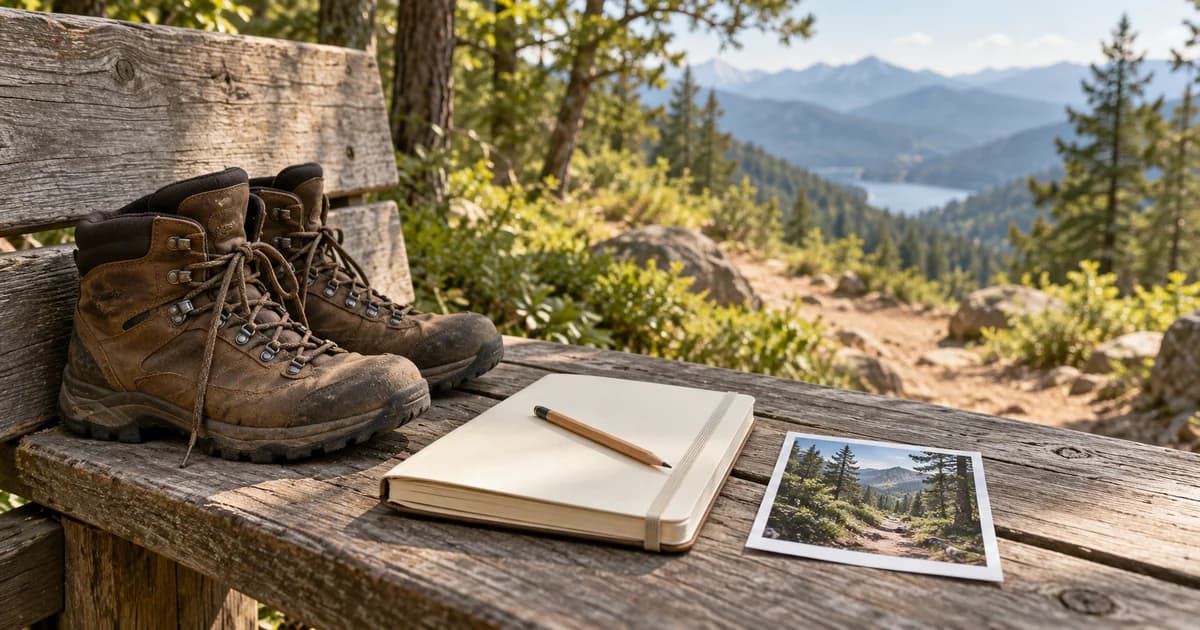
After a walk, ‘I heard birds in the park’ may leave you unsure where or when you heard them. Choose somewhere you can pause safely, such as a bench or a suitable spot beside the path, and take one photograph of the surroundings. There is no need to look at the screen and write while walking or crossing a road. The entry can begin once you have stopped.
Add where you were: ‘Sitting on the bench facing the pond.’ Even if your photograph looks straight ahead, a sound may have come from behind or beside you. Do not automatically connect a sound to an object simply because it appears in the image. The photo preserves a view from the listening spot; your note can explain the parts of that experience that were outside the frame.
Describe nearby sounds alongside the distant background
A fictional editorial scene might be ‘A shoe scraping nearby, a low sound continuing in the distance, and two short high sounds over it.’ You can describe pitch, rhythm, and overlap in your own words without knowing the exact names of the sources. The record does not depend on identifying a bird species or a type of machine. How the sounds were heard together is enough to begin describing that spot.
Near and far describe the distance you perceived while you were there. If you did not measure it, leave it in those terms rather than turn it into a number of meters. The sound that seemed loudest may differ from the one that seemed closest. You can keep those observations separate, preserving both impressions instead of using loudness as though it were a measurement of distance.
Sketch continuous and intermittent sounds in a sentence
Write about occasional sounds beside one that continued, and the note starts to show how you heard the place. Try ‘The low sound continued while I was there; rustling overlapped it from time to time.’ Limit the description to the period you actually listened. A sound continuing during your stop does not mean that it continued all day or that it would have been heard the same way elsewhere.
If you recall another sound later, distinguish that recollection from notes made at the time. You can leave the order as ‘Sequence not remembered’ if you no longer know which came first. Focus on the pattern of sounds around you rather than transcribing someone else's private conversation. The entry can preserve a listening experience without making other people's words its subject.
Connect one place photo with a listening note
Choose somewhere you can safely stop and briefly describe where you stood or sat.
Take a photo that identifies the surroundings and describe the sounds you actually heard in your own words.
Add features worth remembering: perceived distance, continuity, interruptions, or sounds overlapping one another.
Separate confirmed sources from guesses, and start a distinct note if you move to another listening point.
If the source is unknown, describe how it sounded
You might write ‘A short sound like metal striking metal from the direction of the fence.’ If you did not see its source, do not turn it into a confirmed bicycle sound. If you later check the source directly, add when you confirmed it. You can leave your original listening description in place, preserving the difference between what you heard at first and what you learned afterward.
A visit to the same bench the following day is a separate observation. Write ‘Did not hear last time's high sound while I was here today,’ without deciding that the sound has disappeared or the surroundings have improved. Photographs and personal impressions alone do not assess noise levels or environmental safety. Keep the statement tied to the particular stop and period you actually experienced.
Photos and writing can complete the entry without audio
In Pogaem, keep the scene you heard through dated photos and notes. Put the stopping point in the title and describe ‘a continuous distant sound, interrupted by a nearby sound’ in the body. If you paused at several places on one walk, separate entries for the different stops can help preserve how each place sounded to you rather than merging the entire walk into one listening scene.
This method does not describe uploading audio files or automatically recognizing sounds. The photograph is a clue to the place, and you supply the sound description in writing. Even a short note can preserve one listening scene if it tells you where you were and what you heard together. You do not need a recording to give those remembered sounds a clear place in the journal.
Frequently asked questions
Do I need recording equipment to keep a soundwalk journal?
You can start this record with a photo of the surroundings and written notes. Describe the sounds you actually heard; this method does not depend on audio upload or acoustic analysis in Pogaem.
What should I write if I do not know the bird or machine?
Describe the sound in your own words, such as short repetitions or a low sound continuing in the distance. Keep its source unknown unless you confirmed it directly.
If I cannot hear a previous sound, can I say it has disappeared?
Say that you did not hear it during today's stop. Do not extend that observation to times or places beyond the period and location where you listened.