Follow one gap all the way through
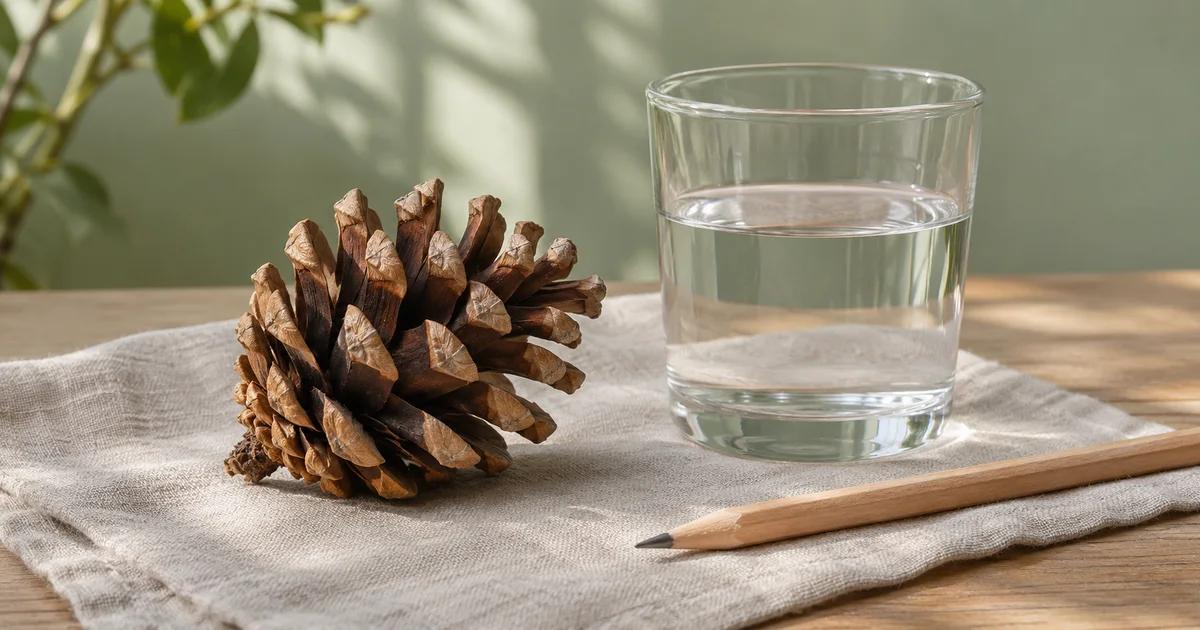
Choose a dry pine cone with open scales. Find a gap you can recognize, then photograph it before wetting the cone, after soaking it and again as it dries. The scales can draw inward when wet and spread apart as they dry. Tracking the same pair lets you see how far they have moved.
Pick a landmark before adding water
Look for a chipped tip or a pale patch. Stand the cone with its top up and that landmark facing the camera. A sheet of light paper behind it makes the space between neighboring scales easy to see. Make sure the picture shows your landmark as well as the gap above it.
Make a dry, wet and drying record
Photograph the dry cone from the side. Include the scale with the chipped tip and the one just above it, so you can find both again after their edges move.
Place the cone in water. When you check it, lift it out and turn the landmark to face you again. Photograph the gap and jot down the actual observation time.
Leave the cone to air-dry in a ventilated spot. On your next visit, compare that same gap with the first photo. Record whether it is still closed, partly open or back to its original width as far as you can see.
What a sliver of white tells you
In our sample sequence, a band of white paper shows above the chipped scale in the dry photo. After soaking, the scales meet and the band disappears. As the cone dries, a hairline of white becomes visible in the third picture.
“Starting to reopen” fits that third picture. You don't yet have evidence that the gap has regained its full width. If one photo shows the reverse side of the cone, leave it out of the width comparison.
Keep track when drying runs into another day
In Pogaem, add the dry and wet views to the day you started and note when you lifted the cone out of the water. If you next check it tomorrow, use tomorrow’s date for that photo. You can then tell time spent in the water from time spent drying.
Frequently asked questions
Can I start with a tightly closed cone?
Pick one that already has a visible gap for this activity. You need a dry opening you can see before you can tell whether it narrows when wet.
How long should I wait for all the scales to reopen?
Write down what you see when you actually check. “Still closed at the next check” is a complete observation. You can look again later to see whether it changes.
What if there’s no chipped tip to use as a landmark?
Look for two distinctive scales together, perhaps a pale one above a crooked one. If you lose track of the spot, choose a new view and compare the photos taken from then on.
Sources
- Bloomfield Science Museum’s pine cone experiment · Accessed: 2026-11-24