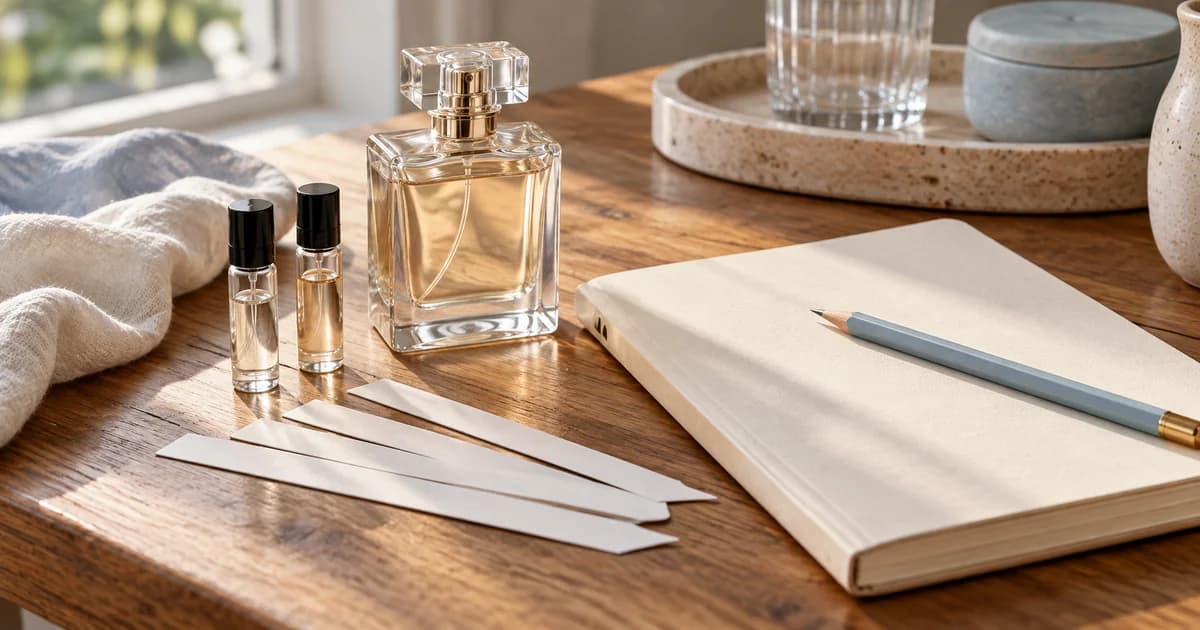
Identify this particular test, not only the perfume name
Give each test an identifier such as “Blotter A,” alongside the product name, any concentration label you confirmed, and the date. A strip received in a shop and a sample tried another day should not become one continuous experience. If you have not established the exact product, label it as a possible match or unconfirmed rather than letting the photograph fill the gap.
Add where you smelled it within what you know firsthand. An impression from paper and one from a product already worn on skin should not be merged as identical conditions. This guide records tests that have already happened. It does not provide skin-testing instructions or recommend an amount to apply. The useful question is which existing attempt your note actually describes.
Smelling the same test again differs from applying it again
An invented editorial note is “Blotter A / 10:00 first note: seems bright / 10:20, same paper: sweetness stands out more.” It is not a product review or a recommended observation interval. If you separately confirmed the application time, you can add elapsed time. Do not substitute the first note's timestamp for application time or invent exact minutes when that starting point is unknown.
If you applied more fragrance or changed the paper, identify a new test from that point. Do not describe the fresh application as though it were the lingering scent of the earlier one. A timeline is useful only if you can tell which application or strip each observation belongs to. Keep the old and new identifiers readable beside their own impressions.
Add timed observations to one identifiable test
Record the product name you confirmed and an identifier for this particular attempt.
Connect the actual observation surface, such as a blotter, and distinguish known application and first-observation times.
When revisiting that same test, add the time and your impression, leaving unobserved intervals empty.
Start a new attempt for a fresh application and leave one question you would like to check later.
Describe your impression in words that belong to you
You can write “Reminds me of a wooden drawer” or “Seems softer than at first” without knowing expert ingredient names. A manufacturer listing rose does not establish that you personally identified it. Keep the product description and your own association on different lines. That distinction lets you see what you noticed rather than simply rereading an official note list as your own observation.
Leave unrecorded intervals empty instead of filling them with a standard sequence of stages. Two observations do not establish an exact duration of lasting power. A scent feeling weaker to you does not mean nobody else can detect it. You can finish with the impression you actually checked that day and an open question, without turning either into a universal performance conclusion.
Read the conditions before comparing another day
For another test, refer to the earlier attempt and record the conditions you checked this time. Consider whether the surface, place, and observation time match before comparing one impression. Start with your new words rather than copying the expectations from the first entry. You can preserve a small comparison without making the two occasions appear more alike than you know they were.
If your preference changes, keep both entries instead of rewriting the earlier note to reach one consistent opinion. “Liked it then; felt differently today” is enough to distinguish the occasions. Even if you record a purchase decision or another person's reaction, do not generalize that experience into a claim about the perfume's performance or a use that suits everybody.
Let the photo identify the object and the note describe the scent
In Pogaem, keep a product or blotter photo with a title and your own dated notes. Using the same attempt name gives you a clue to which observations belong together when they were made at several times. The fragrance itself is not contained in the picture. The words you choose are what preserve your personal impression for a later reading.
This does not mean Pogaem recognizes scents, analyzes ingredients, or calculates how long a fragrance lasts. Uploading a product image also does not automatically classify it. Keep the entry as a record of personal preferences and observations, rather than a way to determine a suitable product or health compatibility. You are documenting what you noticed, with the limits of that particular test intact.
Frequently asked questions
Can I write scent notes without knowing ingredient names?
Yes. Use your own associations and ordinary words. Keep ingredients named in the product description separate from impressions you personally recognized.
What if I cannot remember when the test started?
Mark the starting time as unknown and begin with the time and impression you can check now. Do not invent a precise elapsed duration.
Is a later fresh application part of the same test?
Label it as a new attempt and refer back to the earlier one if useful. Do not treat the new impression as proof that the earlier application is still lingering.