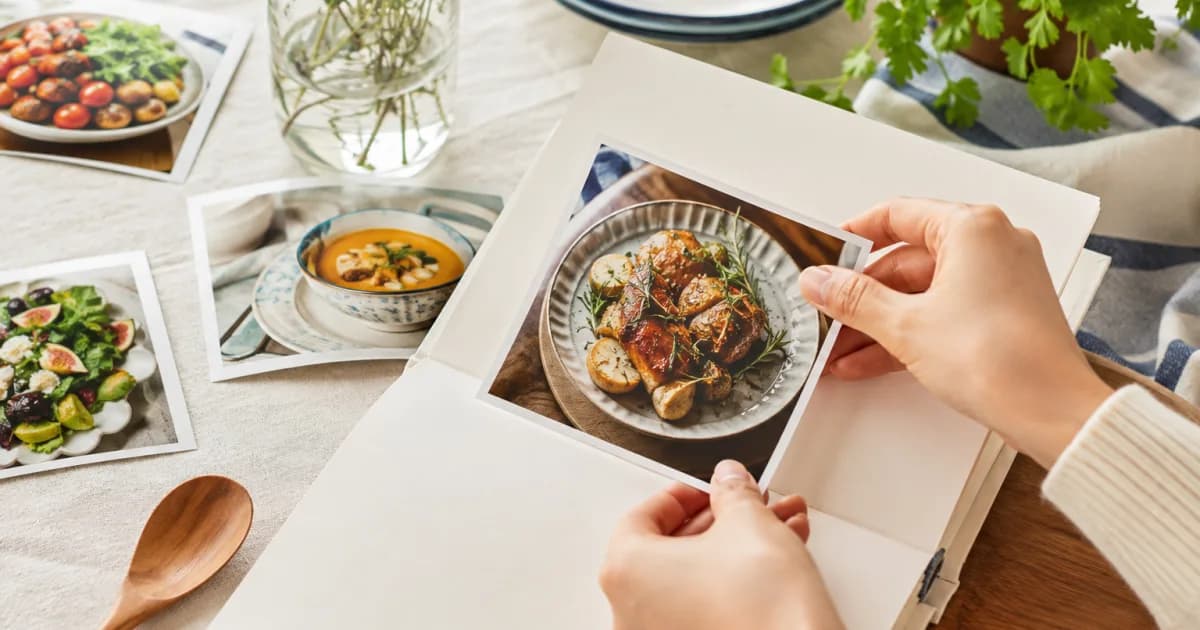
Record the container and the lunch around the menu
An old lunch photo may remind you what you ate without showing which container you used or how easy it was to unpack at work. This journal narrows the focus from choosing meals to remembering the experience of taking food with you. The same rice dish can lead to a different entry when you use a different box or pack its sides separately.
You do not need to take both a before and an after photo. One picture at home, followed by a note later, is enough to begin. A container can be called “Square box with the blue lid” rather than its product name. Choose a description you will recognize next time, without creating a long form you have to fill in for every lunch.
Separate the packing note from the after-lunch note
Here is an editorial example: before leaving, write “Sandwich and fruit · fruit in a separate small box.” After lunch, add “Fruit box was awkward to get out of the bag · put it near the top next time.” Keeping these on separate lines lets you see both what you intended when packing and what actually happened when you opened the bag.
If someone else ate the lunch, ask about their experience rather than assuming a portion was too small or a container worked well. You can leave a line such as “Add their comments this evening” until you know. A photo of the packed food is a memory aid; it cannot establish food safety or nutritional adequacy from appearance alone.
Record one packed lunch in Pogaem
Create a personal calendar such as “Lunches for work” and choose the date you actually took the meal with you.
Add a photo taken before closing the lid, then note the menu, the container, and anything packed separately.
After eating, open the same entry and add what you experienced, such as how easy the lunch was to unpack.
End with one thing to change, then take a new photo on the day you actually try that change.
Connect the packer's note with the eater's experience
If family members or partners take turns preparing lunch, those who agree can use a shared calendar. The person packing can add the photo, and the person eating can leave a specific comment: “The small box would be easier to reach at the top of the bag.” That connects the preparation with something the other person actually noticed later.
Use comments as a conversation about the next lunch, rather than a rating of the food or the person who made it. Both people can add photos on the same date, but there is no need to require an empty-box photo as proof every time. Meals you want to keep to yourself can stay in a separate personal calendar.
Choose one thing to change when you revisit a photo
When packing a similar meal, pick one detail from the previous entry. If the note says the separate sauce pot was difficult to open, record the different pot you try next and what using it was like. Changing the meal, container, and bag at once may leave you unsure which difference mattered when you look back at the photos.
Your photos and notes do not replace food-storage guidance. For storage and eating decisions, check product instructions and reliable food-safety information appropriate to the situation. Keep this journal focused on the objects you actually used and the experience you can describe yourself. There is no need to infer a safe storage time from how the lunch looks in a photo.
Look for a combination you would pack again
If you missed the photo, you do not need to restage an empty box to fill the date. Leave the menu and packing details you clearly remember, or skip that day. A useful record has information you would open before another workday; it does not depend on a calendar with no gaps or a matching set of lunch photos.
Use the calendar to find the day you took a lunch and album view to browse the photos you kept. For now, open the most recent photo and add just two things: one detail you would keep and one you would change. You can start there without organizing every packed lunch you have ever photographed.
Frequently asked questions
Do I need lunchbox photos before and after eating?
No. You can add an after-lunch note to one preparation photo. Distinguishing the two moments gives you useful context for packing the next lunch.
Can I keep the record with the family member who packs my lunch?
Yes. The person packing and the person eating can add photos, notes, and comments in a Pogaem shared calendar. Agree first on what to include and what feels comfortable.
Does Pogaem calculate calories or tell me how long a packed lunch keeps?
This guide uses dated photos and notes. Pogaem is not presented as a calorie calculator or a tool for deciding a food's safe storage time.