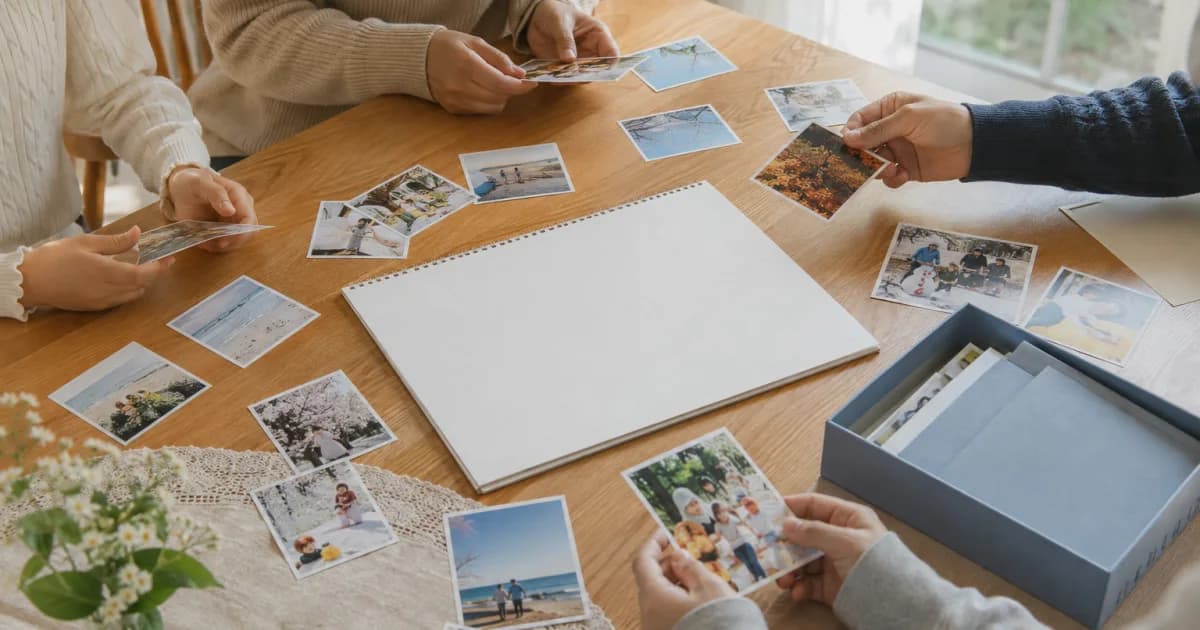
Choose one photograph and ask what feels okay to discuss
Before starting a conversation with a family photograph, ask whether the other person is comfortable looking at it and talking about it. Choose one picture and try, “Would you like to talk about this photo for a little while? We can skip anything you do not want to answer.” Being family does not require someone to explain every scene.
Agree separately on whether you may keep what they say. Ask about taking written notes, who could see them, and when to stop. The aim is to hear the story they choose to tell, rather than investigate everyone and everything in the picture. The questions and answers in this article are original fictional examples created by the editorial team.
Replace questions that already contain an answer
“You had a wonderful time that day, didn’t you?” puts your interpretation into the question. “What comes to mind when you look at this photograph?” leaves room for a different answer. Ask one short question instead of bundling who, when, and where into a single request.
Avoid hiding your own memory in the wording. Instead of “Uncle Ben was waiting for us here, wasn’t he?” you could ask, “Who do you remember being outside the picture?” If the answer differs from yours, let it remain a conversation rather than a memory quiz. Consider whether curiosity is what is driving the question.
Four steps to prepare the questions and hold the conversation
Choose one photograph together and agree on talking, note-taking, sharing, and the option to stop.
Write two open questions each for the opening, the scene, and the closing. Remove wording that supplies an answer or your own interpretation.
Ask one question and wait. Use words from the actual answer to choose a follow-up, and skip what the person does not remember.
Ask what they want to add or leave out, then close the conversation. Keep your prepared questions separate from the answers you actually heard.
A complete question sheet: two opening, two scene, two closing
Here is a complete set for one photograph. Open with ① “What is the first thing that comes to mind when you look at this picture?” and ② “Which part of the picture would you like to tell me more about?” Explore the scene with ③ “What were you doing there that day?” and ④ “What else comes to mind that we cannot see in the photograph?”
Close with ⑤ “What would you like to add to or correct in what we talked about today?” and ⑥ “What would you like me to leave out if I keep a record of this story?” It is fine if there is nothing to add or no answer comes to mind. The six questions give you a possible sequence; using every one is optional.
Two ways to follow the answer you actually hear
Suppose the first question brings this fictional reply: “I remember running because we thought we might miss the train on the last day of the trip.” Pick up “running” with “What do you still remember about that run?” Avoid completing the story yourself with “You must have been upset about missing the train.” The reply has not said they missed it or how they felt.
If the reply is “I do not really remember this photograph,” offer a choice: “Shall we move on from this one?” Change pictures if they would like another, or finish if they prefer to stop. You do not have to push on to question ③ or keep repeating a guessed date to prompt a memory.
Make room for silence, different memories, and stopping
When someone pauses, wait before adding another question. You can ask, “Would you like a break, or shall we finish here?” without deciding that your impression of their discomfort tells you what they want. If they say they want to stop, stop even if questions remain.
If their account differs from yours, you can record, “My memory is different; this is what I heard today.” Avoid demanding confirmation if the conversation turns into an argument or reaches something they do not want to discuss. Check the wording and intended audience again before publishing it or passing it around the family.
Separate the question sheet from the words you heard
You can keep the photograph and questions you wrote in Pogaem before the conversation. Afterwards, distinguish “Prepared questions,” “What I actually heard,” and “My thoughts” in the entry title or body. Leave unanswered questions open, and check direct quotations with the person to make sure they convey the intended meaning.
Use the date you write the entry, adding the photograph’s date and the conversation’s date in the body as far as you know them. Keep a private calendar draft distinct from a record you plan to share. This is a way to listen and write your own notes; it does not describe interview recording or automatic transcription features.
Frequently asked questions
Can I ask about a photograph if I do not know its date or the people in it?
Yes, but leave guessed names and dates out of the question rather than treating them as the answer. If the other person does not know either, keep that uncertainty and choose another part of the conversation.
Do we have to finish all six questions?
No. The six questions are a preparation example. Change the order or skip questions in response to the conversation, and finish whenever the other person wants to stop.
Does Pogaem record or automatically transcribe the interview?
This article describes listening and writing the questions and answers yourself. It does not assume interview recording or automatic transcription as Pogaem features.