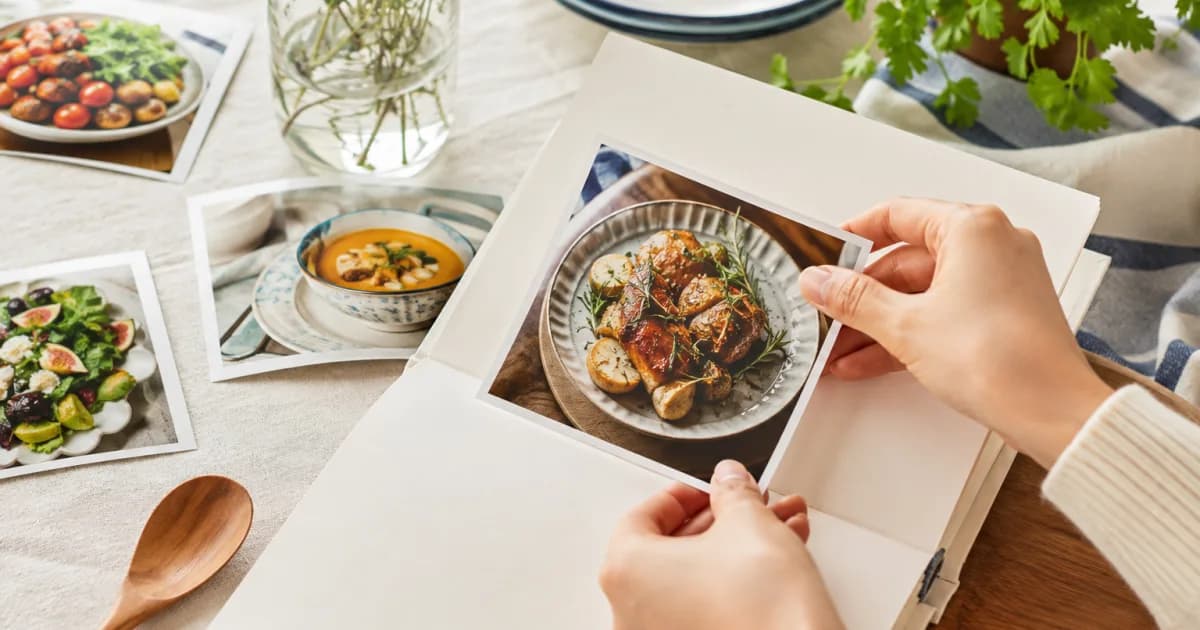
Start with meals you would like to eat again
Choose dishes you would like again from past meal photos, then put each on a day when preparing it seems practical. Read notes you wrote alongside them, such as “We both liked this” or “Easy to eat on my own.” Ask whether the other person wants it again rather than deciding their preferences from a picture.
Name each candidate in words you know. A photograph cannot tell you exactly which ingredients were used, what remains at home now, or how many minutes preparation takes. Separate conditions you know from experience from things you need to check. You do not have to add an unfamiliar dish simply to fill seven spaces.
Write down who will eat at home each day
Before assigning meals, note who expects to eat at home from Monday to Sunday, their expected return time, and the time available for preparation. For example: “Tuesday: one person, late home, 15 minutes available.” That is a constraint in your schedule, not a promise that a particular dish cooks in 15 minutes.
If nobody will be home or you already plan to eat out, record that first. The example below imagines two adults, with at least one eating at home every evening. You need not replace an existing dinner engagement with a home-cooked meal. Ask the people involved about preferences and any food restrictions they already know.
Four steps to assign seven dinners
Choose dishes you would like again from past photos and your own notes, and check the preferences of anyone eating with you.
Write down who will eat at home, expected return times, and available preparation time for all seven days.
Place meals whose preparation you know on suitable days, adding a reason for each of the seven choices.
Choose one fallback for a busy evening. After eating, record the actual meal separately instead of erasing the original plan.
A complete Monday-to-Sunday dinner plan
This is an original fictional editorial plan, not a recipe or nutritional menu. Two imagined adults, Alex and Sam, choose egg rice bowls, pasta, stir-fried vegetables with rice, curry, pan-fried tofu with rice, rice rolls, and udon from dishes they both liked in past photos. On Monday, both expect to be home at 7 p.m. with 30 minutes available, so they choose egg rice bowls: a meal they have prepared together before. On Tuesday, only Sam will return at 9 p.m., with 15 minutes available. Sam chooses udon as a dish to enjoy alone. On Wednesday, both will return at 7 p.m. with 40 minutes available, so they choose pasta after confirming they can prepare it together.
On Thursday, only Alex will return at 8 p.m., with 25 minutes available, and chooses pan-fried tofu with rice after revisiting a photo of a previous solo dinner. On Friday, both return at 8 p.m. with 30 minutes available and agree they want stir-fried vegetables with rice. On Saturday, both will be home for a 6 p.m. dinner, with 60 minutes available, and decide to make rice rolls together. On Sunday, both will again eat at home at 6 p.m., allowing 45 minutes for curry after checking their separate “I would like this again” notes. These times are windows the fictional pair has set aside, not cooking-time instructions for other households.
Leave one fallback for an unexpectedly busy day
The example fallback is: “If preparation becomes difficult, each of us will choose a takeout dinner from a restaurant we already use.” If Friday’s schedule changes, they first contact each other about who will eat and when, then confirm whether to use that option. A fallback does not have to use ingredients already at home or food from the previous day.
If someone no longer wants a dish, follow their current preference rather than counting how often it appears in old photos. If Alex does not want Sunday’s curry, they can agree on another dish and write down its preparation requirements. Photos are clues for making a choice; writing a plan once does not fix what someone must eat.
Keep the plan and the actual meal in separate sentences
If Friday becomes a takeout evening, write: “Planned: stir-fried vegetables with rice. Actual: home late, so we each chose a takeout dinner.” Keeping the original reason and what changed helps you decide what to choose for a similar day next week.
You do not need to score how many of the seven meals you followed. At the end of the week, choose one dish you want again and one you would put on a different day. Do not present a planned meal as a meal you actually ate, or fill a missing day with an imagined dinner.
Write the plan yourself and date photos to the actual meal
In Pogaem, you can keep selected meal photos and your own planning text in a personal entry. Choose the day you wrote the plan as its entry date, then label the text “Next week’s dinner plan” and state the period it covers. Automatic menu assignment or conversion into a shopping list is not a feature described here.
Keep actual meal photos on the dates you ate, adding your own note about any change from the plan. You can still write a title or body text on a day without a photo. Even when you made the plan together, agree on the audience before sharing someone else’s schedule or meal pictures.
Frequently asked questions
Do I need to plan every meal of the week?
This example chooses seven dinners for the following week. You do not need to fill breakfast and lunch as well. If you already plan to eat out one evening, record that arrangement.
What if I eat something different on the planned day?
Keep the plan and actual meal alongside each other. Note who ended up eating when and why the choice changed. Decide later whether to choose the original dish another week.
Does Pogaem automatically make a menu or shopping list?
You choose meals and decide what to buy yourself. Pogaem can hold selected photos and the planning and actual-meal notes you write.