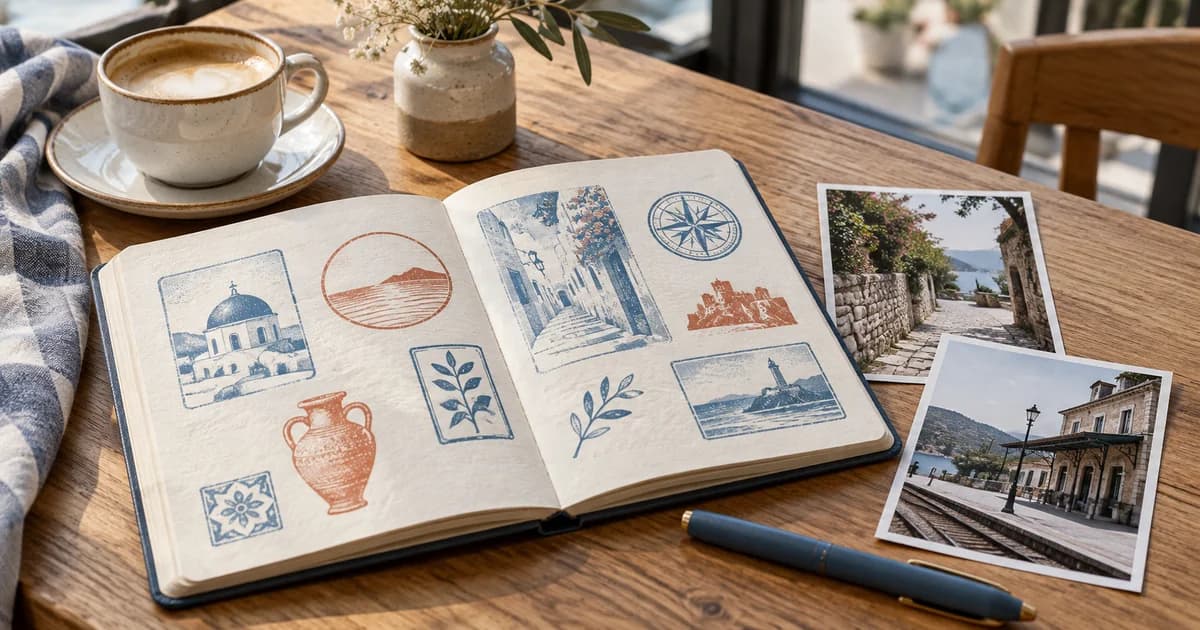
Give each stamp a stop you can recognize
Write the tour name and stop beside a stamp, then leave a page or position clue for finding it in the book. Several similar stamps on one page may otherwise be difficult to connect with your photos. Begin with links between the stamped page and the visit scene rather than a stamp total. If the stamping location differed from the place visited, name both.
Tours with similar names may belong to different years or routes. Keep the route name you checked at the time distinct from today's information. To learn current participation conditions or reward availability, consult the organizer separately. A personal diary preserves the context of your own visit; an older note does not become the current official guidance just because you can still find it.
Separate the visit date from the day you received the stamp
An invented editorial format is “Autumn walk route A / stop: old station / visited October 24 / stamp received October 25 / stamping location: information desk / notebook page 3, right side.” This is not a real event listing. If those events happened on different days, keep them separate, including a later date when you photographed the notebook. Taking the page photo does not change the visit date.
If you have a stamp but cannot recall the visit context, write “Visit date unconfirmed.” Conversely, you can record a place you actually visited even without its stamp. A photo diary need not fill every blank in the stamp book. Preserve the parts of the trip you know, rather than using a missing mark or an unclear memory to decide that an experience did or did not happen.
Connect a stamp-book page with visit photos
Identify the tour and stop, then note the page or position where its stamp can be found.
Choose a stamp photo and an actual visit scene, using the same stop name for both.
Distinguish the visit, stamping, and notebook-photo dates within what you confirmed.
Record a return visit as a new event and add one scene that differs from the earlier entry.
One page photo can refer to several different visits
Photographing a page of six stamps today does not mean you visited six places today. Keep the page image as reference material and connect each known visit through its stop name. Leave unknown visit dates unknown. The number of marks on a page cannot reconstruct which places you traveled between on a particular day, so avoid turning the collection into an invented itinerary.
Two visits to the same stop remain two experiences even if the stamp design is unchanged. One entry might show the entrance, and another something you saw inside. Keep the later visit even when you did not get a second stamp. Reusing a stamp photo also should not imply that you received a new mark unless that actually happened.
The unstamped parts of the trip belong too
When rereading, you may want to remember where you rested or which view stayed with you, not only the stamp design. Add a scene and something the picture cannot explain for each stop you choose to record. For a photo from a companion, establish who took it and which explanation they supplied. Keep their account separate from what you personally experienced.
A paper stamp and a mobile verification screen are different materials. If you keep a screen image, note which service it came from without turning an account detail or verification code into your entry name. This does not mean Pogaem imports another app's visit decisions or completion status. The image is a reference you selected, with its source and meaning explained by you.
Keep the trip's dates and context in Pogaem
Use consistent stop names in dated photos and notes to connect the place with its stamp-book page. If your travel companions agree, a shared calendar lets each add scenes and comments from their perspective. A picture of the stamp can stay as a memory cue beside the visit story, rather than being treated as the entire experience or a complete account of the day.
This approach is not an official check-in, GPS verification, or tour-completion feature. A location saved with a travel photo does not establish that a tour's participation conditions were met. Check participation and reward procedures with the operator. In your personal record, keep the places and events you can actually describe, with uncertain dates and missing stamps left visibly separate.
Frequently asked questions
Can I photograph the whole stamp book at once?
Yes. Connect each stop name and confirmed visit date in the notes so several visits do not all become the date you photographed the pages.
Can I record a visit if I missed its stamp?
Yes. Keep the scene you actually experienced and record the visit separately from whether you obtained a stamp.
Does a Pogaem entry certify completion of a stamp rally?
No. It is a personal photo diary. Check official verification and any reward application through the tour operator's actual conditions and process.