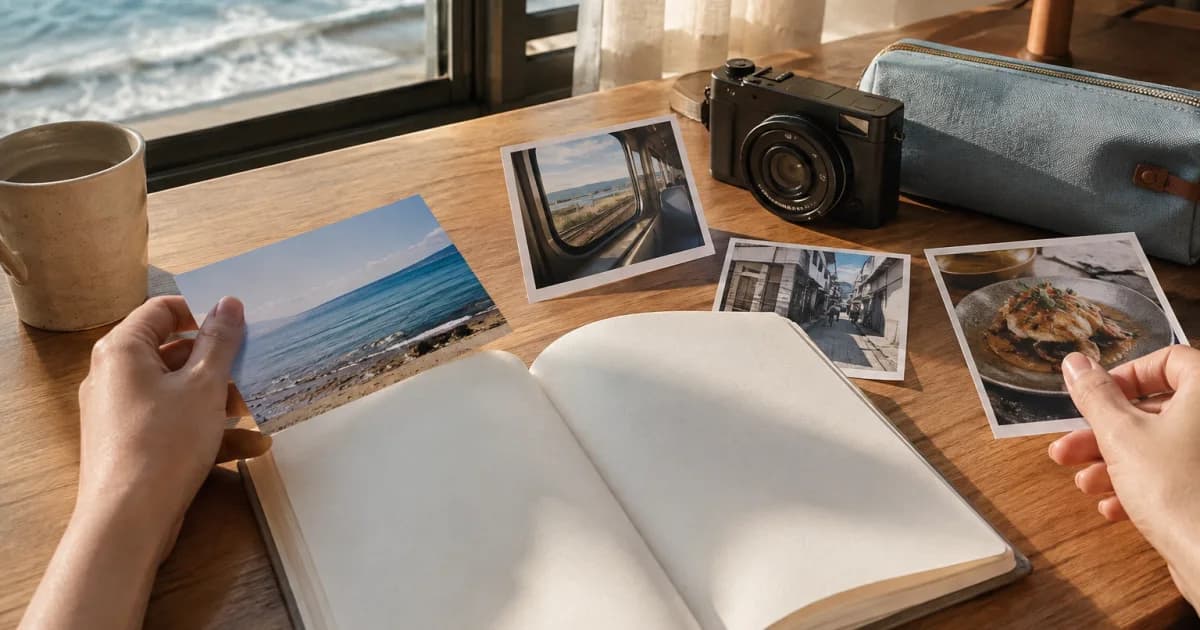
Connect the expense to the scene, not just a number
For each travel expense, write what you paid for, the amount and currency, and who paid beside a photo that recalls the scene. Similar receipts can otherwise be difficult to tell apart after returning. Connect a meal picture to that meal or a landscape to transport you actually used, naming the purchase so not everything visible is treated as part of one charge.
Start with one expense you want to understand again, rather than completing the whole trip budget at once. A label such as “Day two lunch / meal for two” explains the scope of the amount. If you only have a quote or booking screen, label it accordingly. A planned purchase should not become a confirmed payment simply because you saved its picture.
Write the currency and actual payer beside the amount
An editorial example is “Lunch for two / EUR 20 / paid by me / each person's share not yet confirmed.” This invented amount demonstrates a note format, not an actual transaction or expected meal price. Use the currency name or code rather than a bare number. Add cash or card when that distinction will help you recognize the payment later.
If the final card charge in your home currency is still unknown, leave it unknown. Keep the original local-currency payment separate from a statement amount you verify later. When someone else paid, record only what you confirmed with them. The person who handed over the money is not necessarily the person who will ultimately cover the whole expense.
Make a photo note for one travel payment
Choose one expense connected to a travel scene and describe what the payment covered.
Record the confirmed amount, currency, and payer, distinguishing the visit date from the payment date when necessary.
Add a relevant part of the receipt or your own scene photo, and label any unconfirmed details.
When a charge or refund is confirmed later, add a dated note linking it to the original and check for duplicates.
Link a refund without erasing the original payment
If you prepaid for an activity and later received a partial refund, preserve both events. Note when you paid and when you confirmed the refund, with a recognizable reference such as “Partial refund for the earlier activity booking.” Separate the amount actually returned from any amount still unresolved. A cancellation request is not yet confirmation that money has come back. You can keep a question such as “Remaining refund not confirmed” beside the reference to the first entry, so rereading the original does not make an unfinished matter appear settled.
If a companion uploads the same receipt, it may describe the same payment rather than another expense. Use a shared-calendar comment to check which transaction each photo represents and who supplied the information. This method does not assume the app reads receipt amounts, adds them together, or calculates how much each traveler should transfer to someone else.
Separate the day of the memory from the day money moved
A hotel stay and its advance payment can belong to different dates. You can place the diary entry on the day of the travel scene and explain the payment date in the text. If you photographed a receipt after coming home, say so. One photo-file date should not silently become the visit, payment, and capture date all at once.
Try this editorial format: “Visit: second day of the trip / payment: confirmed before departure / receipt photo: taken after returning.” Give the range you know when an exact date is unavailable. There is no need to fill gaps using a current exchange rate or prices from a different trip and present those guesses as the original payment facts.
Revisit the unanswered questions before making a total
On rereading, ask “Whose payment was this?” or “Did I record the refund separately?” Pogaem can hold dated photos and notes you write, with companions contributing relevant context in a shared calendar. If you need a complete cost calculation, use the confirmed information in a separate calculation tool. The photo diary gives those figures a scene and an explanation. Check with the payer when the photo alone leaves the answer unclear.
Before sharing a receipt, look for card details or booking references that the memory does not require. A personal photo note also has a different purpose from official tax documentation or an employer's expense claim. Keep any formal records required for those purposes separately. The useful result here is being able to recognize a trip payment without guessing what the picture meant.
Frequently asked questions
Will uploading a receipt automatically split my travel expenses?
No. This method uses amounts, currencies, and payer details that you enter yourself. It does not imply receipt recognition, exchange-rate conversion, or automatic calculations of what each traveler owes.
Where should I put an expense when the visit and payment dates differ?
Choose the date that fits the travel scene and state the actual payment date in the note. Distinguish the photo date or refund confirmation date too when they differ.
Should I replace the old entry after a partial refund?
You can keep the original payment and add an entry on the date you confirmed the refund. Identify the earlier payment, the amount verified, and anything still unresolved.