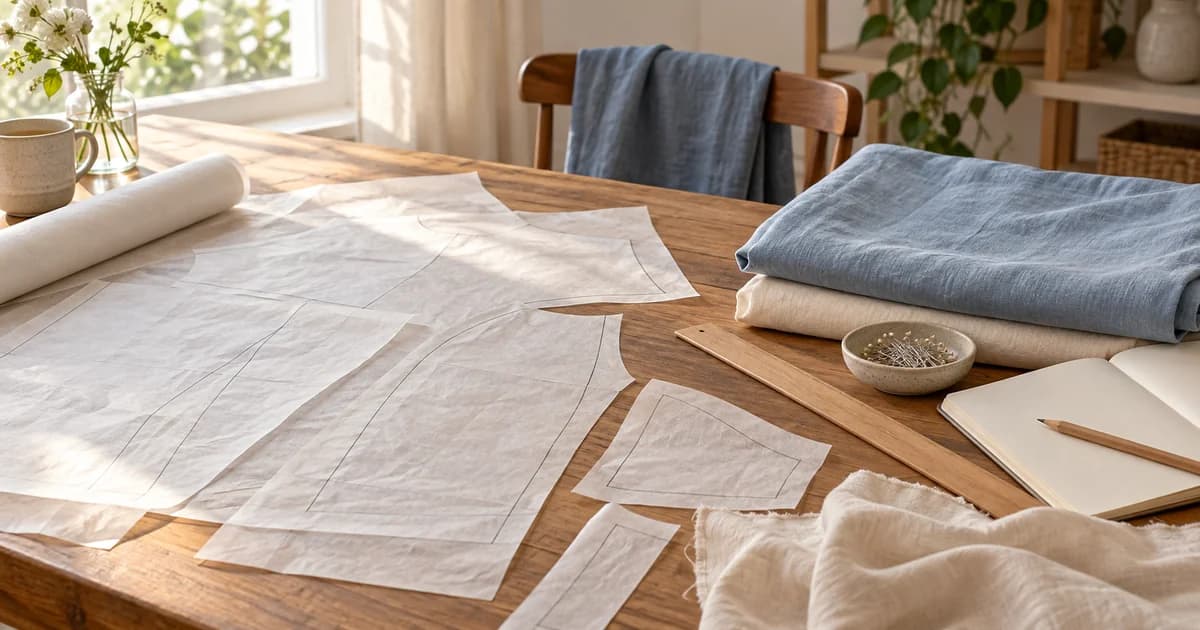
Name the original and altered pattern separately
Record the pattern name, edition or file you confirmed, selected size, and design option before connecting it with a garment. The latest alteration photo is not necessarily the version you actually used. If you chose a different sleeve or length option from the same pattern, retain that distinction. The note should identify the project's source, not just a recognizable finished shape.
Connect names such as “Practice pattern A → revision A1.” The paper pieces can carry different lines even when a file name stays unchanged, so check the actual piece against its photograph and note. The relationship is one you establish yourself; photos do not automatically identify the alterations. A consistent version name gives you somewhere to attach what you confirmed about that particular piece.
Identify the piece and the line you changed
An editorial format is “Practice pattern A1 / sleeve piece / length-alteration line changed / A1 used for the actual cutting.” This is an invented record, not alteration instructions or a recommended measurement. If you include a number, state its unit and reference points. Identify a cutting line or stitching line only through wording you checked rather than guessing which visible line serves which purpose.
If seam-allowance inclusion is unknown, mark it unconfirmed instead of adding an assumed amount. A body measurement, a length on pattern paper, and a value measured on the finished garment refer to different objects. Keep them distinct so a later comparison still has a clear basis. One number should not become another kind of measurement simply because both concern the same project.
Connect a pattern revision with the garment made from it
Confirm the original pattern name, edition, selected size, and design option.
Connect each altered piece and revision name with its photo, then describe the changes actually made.
Record the version used for cutting and use the same identifier with test-garment or toile photos.
Separate observations during fitting from the next alteration plan, and name the following version when you make it.
A planned change is not automatically present in the fabric
A note about shortening a sleeve may not have reached the paper, or you may have cut from another piece. Check the plan, the completed paper alteration, and the actual cutting source separately. If you used front piece A1 with the original sleeve, record that combination as the basis of this garment. Do not label every piece A1 merely to give the whole project one version.
Planning a revision after fitting does not mean the existing test garment was made from that future pattern. A note such as “Toile made from A1 / consider this in A2” keeps result and next action distinct. Also check whether changes marked on the garment were transferred to paper. A fitting mark and a revised pattern piece are separate states until you establish their connection.
Separate fitting observations from a diagnosis of their cause
You can note “Pulls when I raise my arm” or “Hem rises when seated” beside the picture. One photo does not establish the cause or an exact alteration amount. Different fabric or construction can also limit comparison even when the pattern identifier matches. Keep the observation attached to the garment you actually tried, rather than treating it as a prescription for changing every version.
When making it again, review the earlier version, the fabric used this time, and the actual changes together. The old note is reference material, not a guarantee that the same alteration fits the new garment. Focus on what you established during this project instead of evaluating your body or deciding that there is one universal correct fit to reproduce from a photograph.
Write the version relationships in your own project notes
In Pogaem, collect pattern-piece and test-garment photos by date, using the revision name in the title or note. Choose only the part of a pattern needed to identify your work when that is sufficient. For a record shown to someone else, center your own working notes rather than assuming the entire pattern needs to be displayed to explain the project.
This does not mean Pogaem edits pattern files, automatically overlays pieces for comparison, or analyzes body measurements. The article is a documentation method rather than a sewing lesson on how much to alter or where to cut. Keep the actual making information and the version links you checked, leaving technical construction decisions with the pattern and guidance you use for the work.
Frequently asked questions
Can I start with only a finished-garment photo?
Start with what you can establish about the pattern actually used. If its revision is unknown, leave it unconfirmed rather than reconstructing alteration amounts from the image.
How should I record different revisions used for different pieces?
Write the actual combination, such as front A1 and original sleeve. Do not collapse the whole cutting set into one revision name.
Will Pogaem tell me how much to alter a pattern?
No. This method preserves photos and notes checked by the maker. It does not describe automatic measurement analysis or pattern editing.