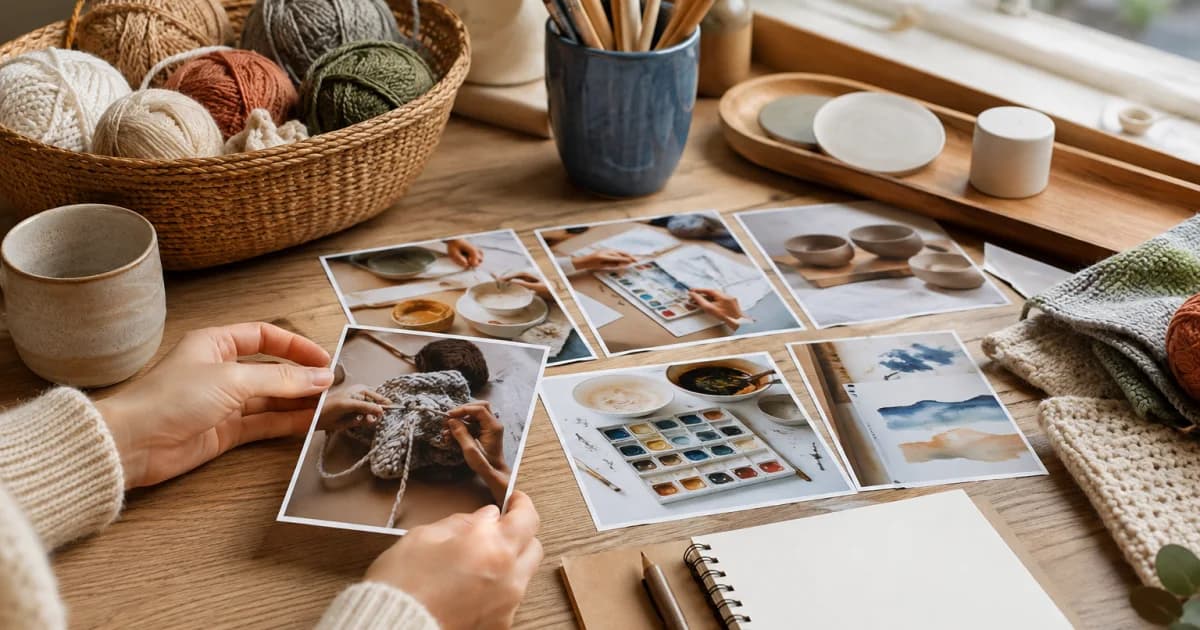
A progress photo and a restart photo have different jobs
A picture showing how much a project has grown may not tell you which part you finished or where in the sequence you stopped. Before putting the work away, record the overall piece and the current working area. These are location clues for your next session, rather than instructions for using knitting needles or a crochet hook, or a substitute for the pattern.
If you switch between several works in progress, give each a recognizable name such as “Blue scarf” or “Small pouch.” A project name and a view of its materials can help distinguish pieces made from similar colors. You can leave a useful note at the moment you stop, before organizing the whole making process into a portfolio or a complete project history.
Write the completed part and the next step separately
Here is an editorial example: “Completed: through the row I counted as 12 / Next: check the pattern position before starting row 13.” The numbers illustrate the note format, not instructions for a real project. “Row 12” alone leaves you wondering whether you finished it or meant to begin it, so label which side of the stopping point the number describes.
If you are uncertain, write “My note says row 12; check against the fabric before continuing.” Do not expect a photo to count rows or identify a wrong stitch for you. The record is a starting point for looking at the work again. Establish what to knit next from the pattern you are using and the piece actually on your needles.
Make a stopping-point note before putting the project away
Name the project and make an entry on the date you actually paused work.
Add an overall photo and a view of the working area, noting what each picture is intended to show.
Record the last completed part, the next thing to check, and yarn and needle details you know from direct use.
When you resume, compare the old note with the fabric and save the starting point you confirmed in a new entry.
Keep a pattern reference and photograph your own work
If you are following a pattern, note a name or link you can find again, along with the page and section. Instead of copying a long pattern into the entry, write a location and a question, such as “Check the next section of the body instructions.” Check the pattern's own conditions if you intend to keep or share material from it.
If direction is hard to recognize in a photo, you can place a handwritten paper label beside the work when taking it. That is a physical note included in the image, rather than a pattern-marking feature in the app. For an entry you share, center the pictures on your own knitting and working notes instead of a copy of someone else's pattern.
Record a new reference point after undoing work
If you unraveled part of the piece or changed yarn during the break, the old row count may no longer describe it. Make a new entry such as “Some work undone after the previous photo / new reference point checked today.” Do not copy an old number into the current note unless you have confirmed that it still fits the work in front of you.
Record changes to needles or yarn as things you actually did. Even with the same yarn name, there is no need to guess specifications you have not checked. You are leaving enough information to recognize what this project currently uses, rather than maintaining an automatic materials inventory. Known details and clearly marked gaps are more useful than an apparently complete list built from assumptions.
Keep the clues that helped you start again
If the earlier note still left you searching, record what the next stopping-point photo should show more clearly. Perhaps the overall piece was recognizable but the working area was hidden. Next time, leave a view of that part. The useful test is whether you can distinguish the next action, rather than whether you wrote a longer or more polished project update.
Pogaem can collect a project's photos and notes by date for you to revisit. This approach does not rely on an automatic row counter or pattern interpretation. Once you have confirmed the clue needed to continue, the note has done its job. You can carry on from today's restart without filling in every date during the period when the project was put away.
Frequently asked questions
Is the current row number enough for a knitting note?
Say whether it is the last completed row or the row you intend to begin. If uncertain, label the number as an estimate and note what to check before continuing.
Does Pogaem count rows or stitches from a photo?
No. This guide uses photos and written notes to record your stopping point. It does not describe automatic row counting, stitch counting, or pattern interpretation.
Can I follow my old note unchanged after a long break?
Compare it with the actual fabric first. If you undid work or changed materials, confirm the current state and continue the record from that point.