Start with things you can see and an agreed play area
In a photo scavenger hunt, players read the prompts first, take pictures, and then look together at how the pictures answer them. Choose your home or another nearby space you are allowed to use. Colors and shapes already visible in that area let you start without searching for hard-to-find objects.
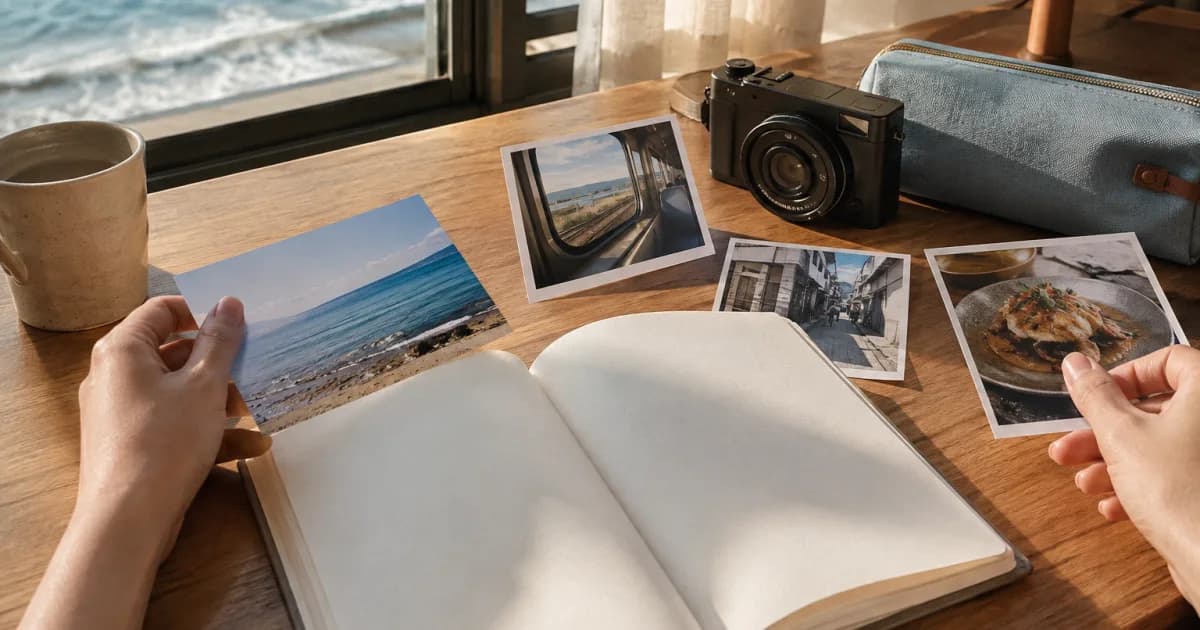
Agree on the people and place involved before you begin. The following original fictional game is for two adults in their shared living and dining area. They will photograph only things visible from the floor and on the dining table, without going outside or opening cupboards. The travel photographs on the cover are not the results of this game.
Four steps from setting up to showing your photographs
Agree on a permitted play area and finish time, and identify people or belongings that should not be photographed.
Read the five prompts together, including the rules for one different photograph per prompt, no reuse, and skipping.
Take photographs within the agreed area. Leave a prompt blank if you cannot find an answer or do not want to photograph it.
Stop at the agreed time and show your pictures in prompt order, explaining each choice. You can play without points or a winner.
Five prompts and a complete set of rules to use
The five prompts for this example are: ① something with a clearly visible red area; ② the same shape repeated at least three times; ③ something reflected in another surface; ④ a surface that suggests a rough or soft texture; and ⑤ something you would like to see again tomorrow. The last prompt has no predetermined answer: the photographer explains the choice.
Here are the complete rules. Play today from 4:00 to 4:15 p.m. in the living and dining area. Each player submits one different photograph for each prompt, and no photograph can answer two prompts. Ask the person sharing the space before moving an object. Mark any unanswered prompt “skipped.” Stop at 4:15, show the pictures in prompt order, and give one sentence explaining each.
A fictional set of five pictures and why they fit
These five results were invented by the editorial team. ① A red coaster: its red area is clear in the middle of the picture. ② A chair back: the same upright slat repeats four times. ③ A metal kettle: the shape of a window is reflected in its surface. Each picture has a feature you can point to for its color, repetition, or reflection.
④ A cotton towel: a close view of the loops suggests the fluffy texture the photographer chose. ⑤ An empty chair by the window: the photographer wants to see that spot with the afternoon light again tomorrow. Each photograph answers just one prompt. The red coaster picture is not submitted again as the texture answer.
Leave room for unclear answers and skipped prompts
If the reflection in picture ③ is hard to see, let the photographer point out the part they noticed. If it is still unclear, label it “reflection difficult to see” and decide whether to choose another photograph or skip the prompt. Getting an answer accepted is no reason to enter an unsafe or excluded area.
You can discuss an unanswered prompt when the game ends. A note such as “I could not see anything red from here” can help you change the prompts for another round. Agree to respect the play area and finish time rather than requiring every space to be filled.
Check permission and offer a seated version
Ask first if a photograph would show someone’s face or private papers. Exclude places where photography is not allowed, and avoid opening other people’s belongings or climbing up to find a subject. For a game outside the home, check the location’s rules and permitted areas first.
A player who cannot or does not want to move around can photograph only what is visible from their seat. You could agree on “things on the table that each person can see from where they are sitting” and adjust the prompts to match. Make room from the start for declining to play or stopping partway through.
Match the prompts to the pictures in your own entry
After playing, select your photographs in Pogaem and write the matching prompt numbers in the body, such as “① Red — coaster.” You can put five pictures in one entry or let each person keep their own photographs in their own entry. Look through the pictures in order and check the numbering yourself.
To keep the results together, use a shared calendar where you actually have permission to write, with an internet connection. Ask before copying another player’s photographs. Agreement to look at the game together and agreement to share its record are separate choices. People apply the rules and decide whether to use scores themselves.
Frequently asked questions
Do I have to take all five photographs?
No. These example rules allow you to skip a prompt you cannot or do not want to photograph. Stop at the finish time and explain any blanks when you look at the results together.
Can one photograph answer two prompts?
In this example, each prompt needs a different photograph and reuse is not allowed. If everyone wants a different rule, agree on it before taking pictures.
Does Pogaem judge the answers or award points?
People decide how to judge the game and whether to use points. Pogaem can hold the photographs you choose and the prompts and explanations you write yourself.