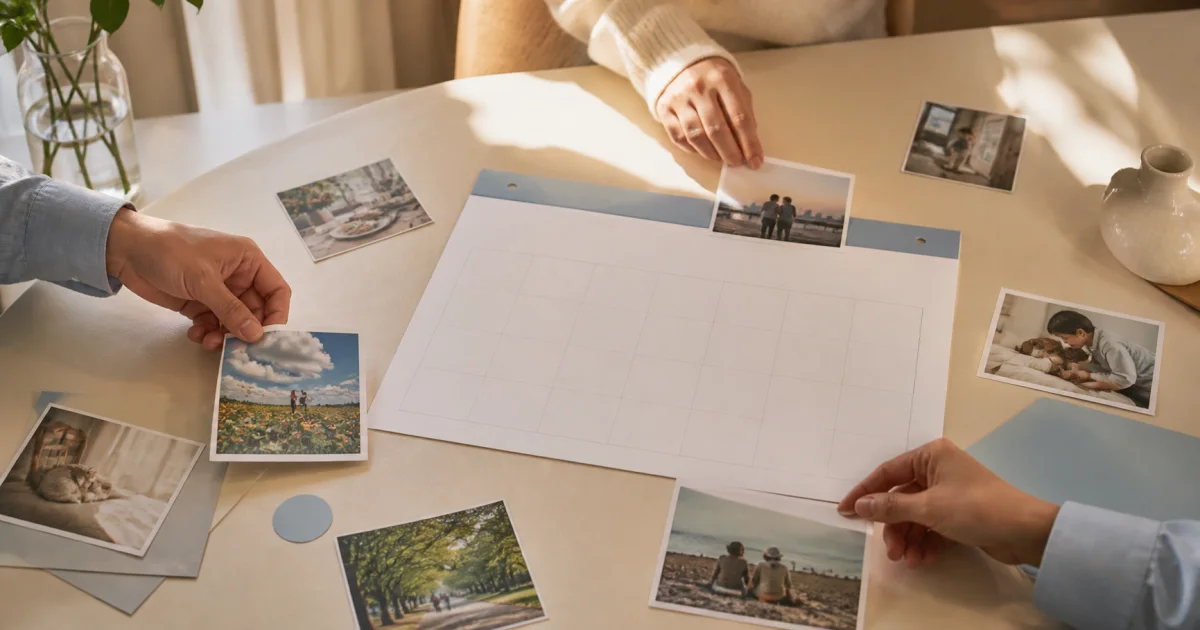
Agree on the care period and which pet each note concerns
First confirm whether the arrangement is one visit while you are out or a stay lasting several days. With several pets, match names to recognizable photos and identify whose care each note describes. Write the owner's last completed action separately from anything they are asking the sitter to do next.
If several supplies have the same name, choose wording or photos you both recognize. Keep entry codes and other people's private information out of home photos. Share necessary access instructions and contact details separately through an appropriate channel agreed between the people involved.
A request describes a plan; a completion note describes an action
‘Please put the toys away this evening’ is a request. A newly uploaded toy photo does not turn it into completed work. The caregiver needs to describe the action's actual scope, such as ‘Put the blue ball in the basket during the evening visit,’ so the next person can understand what happened.
A fictional editorial note is ‘Owner's request: put the ball in the basket after this visit / caregiver's report: put away only the blue ball during the afternoon visit; fabric toy's location unconfirmed.’ Identify the objects handled and the remaining question instead of summarizing everything requested as done.
A photo documents the scene visible at that moment
A picture of a pet beside a bowl shows that moment. It cannot calculate how much the pet ate or establish what the caregiver did. Distinguish the owner's account of usual behavior, behavior you directly observed during care, and information you heard afterward.
A photo diary does not diagnose an animal's health or behavior. For care requiring precise instructions, including feeding or medication, check directly with the owner and the relevant professional. The examples here concern tidying everyday supplies and writing observations; they do not prescribe food quantities or medication procedures.
Leave a handoff the next person can follow
Confirm the pet, care period, and contact method you have agreed to use.
Separate the owner's last completed action from the work requested for this care period.
The caregiver records who acted, when, and what they actually did, marking unfinished work separately.
At the end of care, directly confirm remaining questions and what was handed over, then add the established facts to the record.
Check directly when a reply is missing or a note arrives late
The absence of a reply does not mean the work is complete or that someone has agreed. Use your agreed contact method to ask directly about something needing an immediate answer. An urgent situation should not depend on waiting for a new comment or photo.
For a late entry, distinguish the actual care time from the posting time. If you are unsure whether someone already performed a task, check before repeating it. You can note what you passed on to the returning owner, but a message marked read does not itself confirm or accept the care details.
Use a shared photo diary within the scope you agreed
Participants in a Pogaem shared calendar can add photos and notes and ask questions in comments below an entry. If you agree to record together, write the pet's name and actual visit time in the title or text. First agree which existing personal records and new entries you intend to share.
‘Requested,’ ‘completed,’ and ‘unconfirmed’ are distinctions you write yourself. Do not expect Pogaem to assign care, certify completion, or detect an emergency and contact someone. If a care service has contractual or reporting procedures, follow those separately from your personal photo notes.
Frequently asked questions
Does an uploaded photo mean the requested work is complete?
A photo alone does not establish how much of a request was completed. The caregiver should name what they handled, when, and the work actually done. Check directly if the scope remains unclear.
How should I write several visit notes afterward?
State that the posting date differs from the actual care time. Record only the timing you know, and do not turn an unchecked action into completed work.
Can shared-calendar comments handle urgent contact too?
Send urgent matters or questions needing an immediate answer directly through the agreed contact channel. Photo diary entries and comments should not replace emergency contact or professional care instructions.