Start with one sentence about yourself today
Before looking through the things you use, write one sentence about the part of yourself you want to show. "These days, I go for walks and draw what I noticed when I get home" gives you real actions to choose objects for. A single picture need not contain every aspect of you. Pick the version you want to record today.
Look for things that actually connect with that sentence, rather than filling the frame with new purchases or attractive props. A favorite cup, worn gloves, or a folded map could belong. Ask before using someone else's possessions, and adjust the frame around visible name tags or addresses. The objects do not have to prove a personality trait.
Turn three objects into one introduction
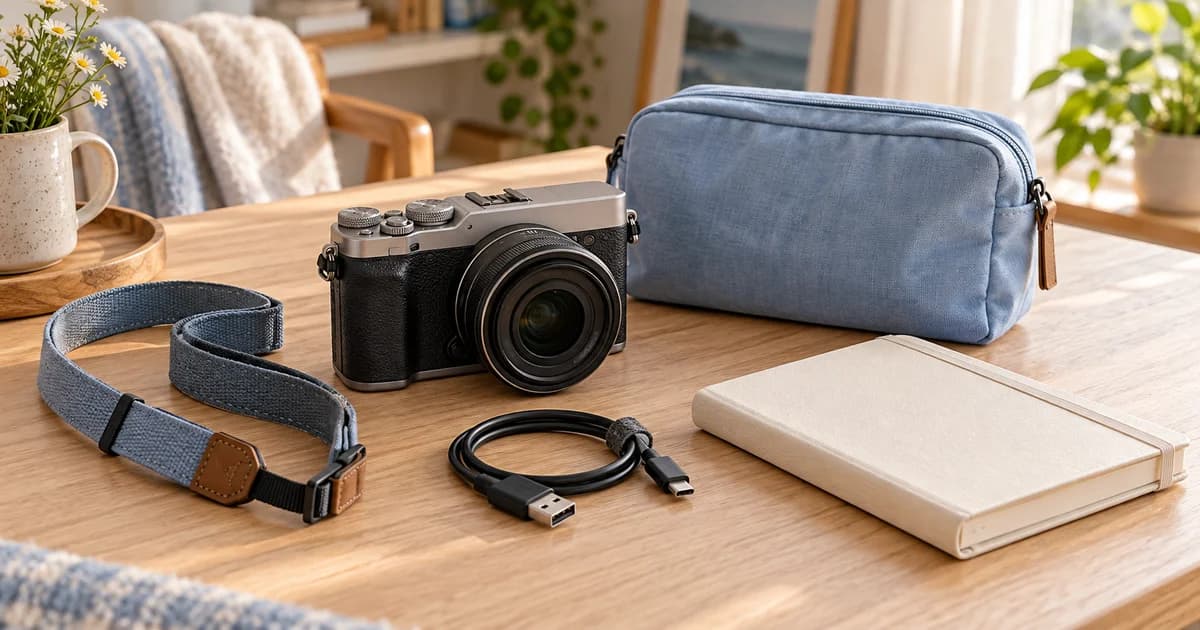
This arrangement and introduction are original fictional examples created by the editorial team. The objects are walking shoes with worn heels, a shortened pencil, and a small sketchbook open on one side. The shoes sit at the upper left, the pencil in the middle, and the sketchbook, showing a drawing of a streetlamp, at the lower right. Imagine arranging these real objects and photographing them to suggest the path from walking to drawing. The separate cover image, with its camera and accessories, illustrates arranging objects rather than this exact portrait.
Here is the finished introduction: "These days, I often choose time for a walk near home over plans to go far away. When I return, I open my sketchbook and draw one thing I spent a while looking at. Today I sharpened my pencil again while drawing the base of a streetlamp. As my shoes wear down and my pencil grows shorter, I keep finding shapes in this neighborhood I want to see again. Right now, I'm someone who passes through the places I've walked once more, on paper."
Make an object self-portrait in four steps
Choose one sentence about a current interest or part of your life that you want to show. Start with something you actually do.
Pick your own objects connected with that sentence and consider why they belong together. Choose a number that suits the scene.
Arrange the objects yourself without obscuring them and take one photograph. Check for personal information and other people’s belongings in the frame.
Write an introduction connecting the reasons you chose the objects. Read it back, then keep the photograph and your writing in an entry for the same date.
Explain your choices when someone reads them differently
Someone might read the example photograph as study supplies. Objects carry different meanings for different viewers. Adding why you chose them can communicate your intention alongside the image. Instead of correcting every other interpretation, put into words the present-day life you meant to record.
If only one object fits, you can photograph that one. You need not buy more things or add props unrelated to your life to make a better picture. Even without a face, a photograph can reveal a living space or personal information, so check the background before sharing. You can also keep the portrait as a personal entry.
Save the photograph and introduction together
In Pogaem, save the still life you photographed and the introduction you wrote as one entry. Choose the date you took the picture and include the sentence about yourself that guided the choices. If you write the introduction later, add its date so it remains distinct from the moment pictured. You can reopen that date in a calendar for the topic and read what you wrote then.
If you later want to make another portrait with different objects, save the new photograph and introduction on that day's entry. Before rewriting an older piece in your current voice, decide whether to keep its original words. The app does not determine the meaning of the objects or write the introduction. You choose which objects to use and which version of yourself to put into words.
Frequently asked questions
Do I have to choose exactly three objects?
Three is only the example in this article. One object or another number can work. Include the things that connect with the part of your present life you want to show.
Is the photograph wrong if someone interprets it differently?
It need not be. Add your reasons for choosing the objects and describe your life in your own words. You do not need everyone to arrive at the same interpretation.
Does Pogaem analyze the objects to describe my personality?
That is not the process described here. You choose and arrange the objects, take the photograph, and write the introduction. Pogaem stores the picture and text you create.