Give the recipe and the actual batch separate names
Start a baking journal by separating the recipe you consulted from the batch you actually made. Saving a favorite cookie recipe does not preserve everything that went into last weekend's dough. Use a recognizable label such as ‘Cookie recipe A / dough batch 2’ so you can connect your notes with this attempt rather than with every bake of the same recipe.
Keep the original link or book page, plus the date you checked it and a note identifying any revised version. Online instructions may change, so write down the few reference details you need to recognize your starting point. This is a way to reconstruct one baking session, rather than a new recipe, a collection of recommended substitutions, or a set of instructions for getting a particular result.
Separate the listed amounts from what went into the bowl
Include units for ingredients you measured, and say when something was added by eye. An editorial example of the note format is ‘Recipe: 60 g sugar / weighed for this batch: 55 g.’ Those figures illustrate documentation, not a recommended formula. The amount you changed and how the finished food tasted to you are different pieces of information; keep both recognizable when reading later.
If you used a different butter or flour, record the product or type you actually used, as far as you know it. A batch with several changes cannot tell you which single change caused a difference. If you did not record an amount, leave it unrecorded rather than filling in a precise number from next-day memory. An honest gap is easier to interpret than invented precision.
Record one baking session in Pogaem
Create an entry on the date you baked. Put the recipe's identifying name and the dough batch in the title or note.
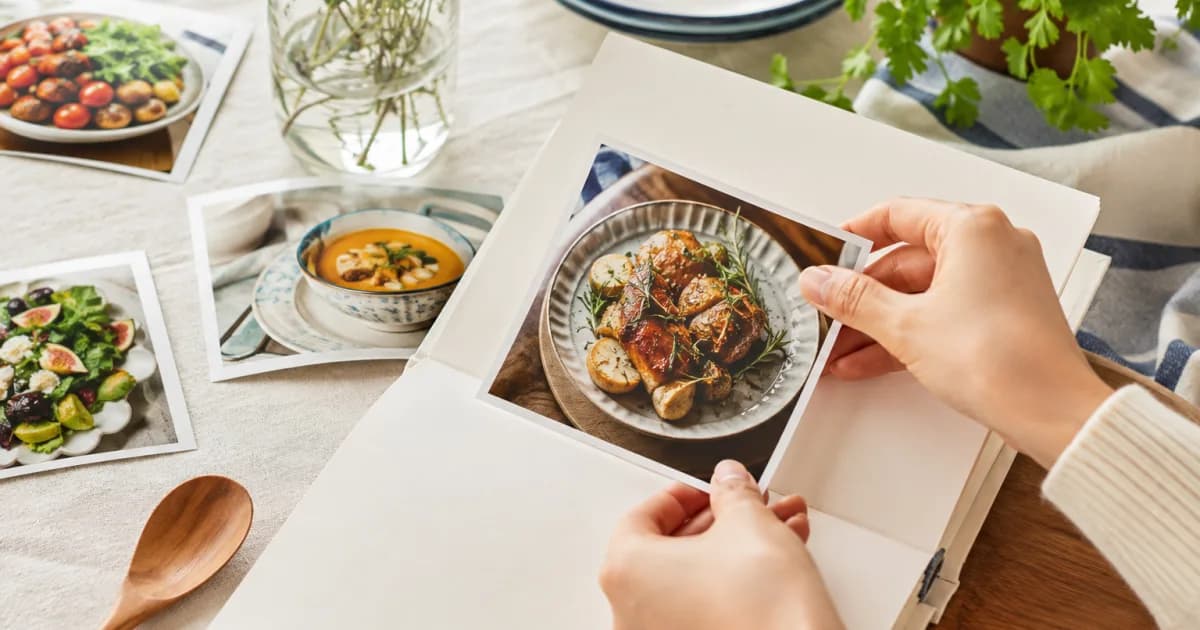
Write the ingredient amounts you actually measured, any substitutions, and the pan you used. Add relevant photos from that session.
For each tray or pan, note its place in the baking order and the oven temperature and time you actually set, where known.
After cooling, add what you directly noticed and choose a condition to check next time. Keep those observations separate from the original instructions.
Two trays from one dough batch need distinguishable photos
Dividing one dough batch across two trays does not make every result interchangeable. Different pans or positions in the baking sequence need labels you can follow. Try ‘Dough batch 2 / first tray’ and ‘same dough / second tray.’ You can make separate entries on the same date or explain the photo sequence within one entry. The useful distinction is which tray a photo actually shows.
An oven's temperature setting and a temperature checked with a separate thermometer are also different facts. If you only saw the setting, label it as the set temperature. Photo color can change with lighting, so one darker image is not enough to determine doneness or explain what happened. Preserve the conditions you observed without turning the photograph into a technical diagnosis of the bake.
Write a result note you can find on the next attempt
Instead of ending with ‘failed,’ identify the result and when you noticed it: ‘The edges look darker than on the first tray,’ or ‘It tasted less sweet to me after cooling.’ Choose an overall photo and a detail that shows the difference you mean. You need enough context to recognize the tray, rather than a large collection of nearly identical finished-food pictures with no identifying notes.
When you bake the same recipe again, start a new dated entry instead of erasing the earlier attempt. Conditions that stayed the same are useful context too, so keep their meaning clear when comparing sessions. Pogaem holds the photos and notes you enter yourself. This journaling method does not depend on automatic ingredient calculations, recipe analysis, or the app controlling an oven.
Keep another person's recipe distinct from your observations
In a shared calendar, focus on photos of what you actually made and change notes you wrote yourself. Someone who tasted the food can add a comment, with their impression attributed to them rather than presented as everyone's verdict. Before sharing a complete recipe or material from a paid class, check the provider's terms. Your personal batch record usually needs a reference and your changes rather than a copied lesson.
Do not use photos to fill in unknown storage conditions or decide whether something is safe to eat. For preparation and storage decisions, consult the guidance for the ingredients and equipment involved. The question this journal answers is a narrower, practical one: ‘What did I actually do in the batch shown here?’ Keeping that question visible helps distinguish a useful baking history from a safety assessment or a claim to the best formula.
Frequently asked questions
Is saving a recipe enough to make a baking journal?
The recipe is your reference; the journal is the batch you actually made. Record the ingredients and amounts used, the changes you made, and the result separately, even when you follow the same recipe again.
How do I record several trays from one dough batch?
Keep the dough batch label the same, but identify the pans and their baking order. Connect each result photo with its actual tray so that different outcomes do not become one ambiguous batch note.
Does Pogaem calculate ingredient formulas or oven temperatures?
This article explains how to make your own record with photos and notes. It does not describe ingredient calculations, oven controls, or a feature that judges doneness from a photograph.