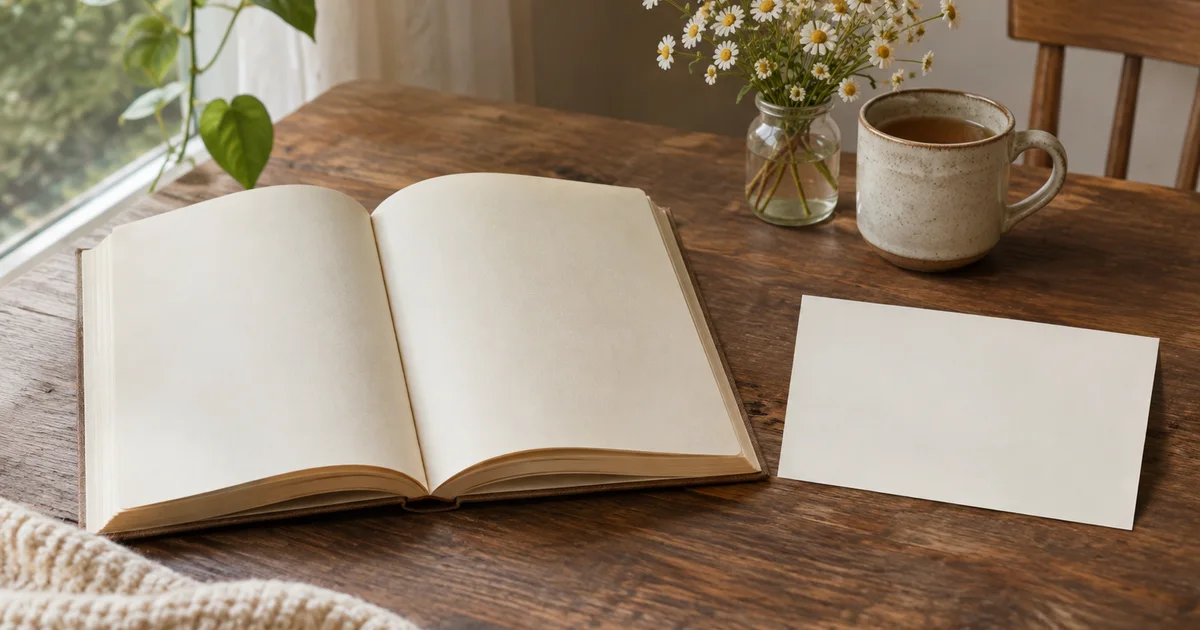
Note when you received the book
When you receive a book, save a cover photo and a clue to when and from whom it came. If there is a card or handwritten message, you can remember that part too.
If you do not want to share a name, write “a book from a friend.” When you do not know the exact day, note the approximate time instead of inventing a date.
Separate their message from your response
Words written in the book belong to the giver; your response after reading belongs to you. Keeping the two apart makes it clear whose words they are when you return to them.
Here is an editorial example: “Friend’s card: suggested reading slowly / My note: the window scene stayed with me.” If you cannot remember the exact wording, summarize rather than use quotation marks.
Choose something you might want to say
After reading, jot down one scene that stayed with you and why. If you are still reading, a question you have so far is enough.
If you want to respond, try your own words: “That scene made me wonder why you chose this for me.” You do not have to send a reply or match the giver’s reaction.
Decide what may be shared
Ask permission before sharing the text of someone else’s card. If a private name or contact detail is visible, cover it or share only the book cover.
Check rights and terms before publicly sharing long passages or images from a book. Your own thoughts and a short description of the situation can be enough.
Record the gift and reading in Pogaem
Put a photo and note on the date you received the book, and date any thoughts you add later. Share only what both people have agreed to share.
Frequently asked questions
Do I have to finish the book first?
No. Start with the moment you received it and add your thoughts later.
Must I share the entire card?
No. Ask the writer’s permission, and leave the contents out if you do not want to share them.
Do I have to send a reply?
No. Keep your response private or share it within an agreed scope.