Separate the letter from the moment
Note when you received the letter, who gave it to you and a scene you remember. You do not need to copy it all: “a note checking in after my move” may be enough to bring it to mind.
If you do not know the date, write “received in the fall, exact date unknown” rather than inventing a receipt date.
Before taking a photo
Cover the address, phone number and any words you do not want shown. Ask the writer before showing the letter or its text to anyone else.
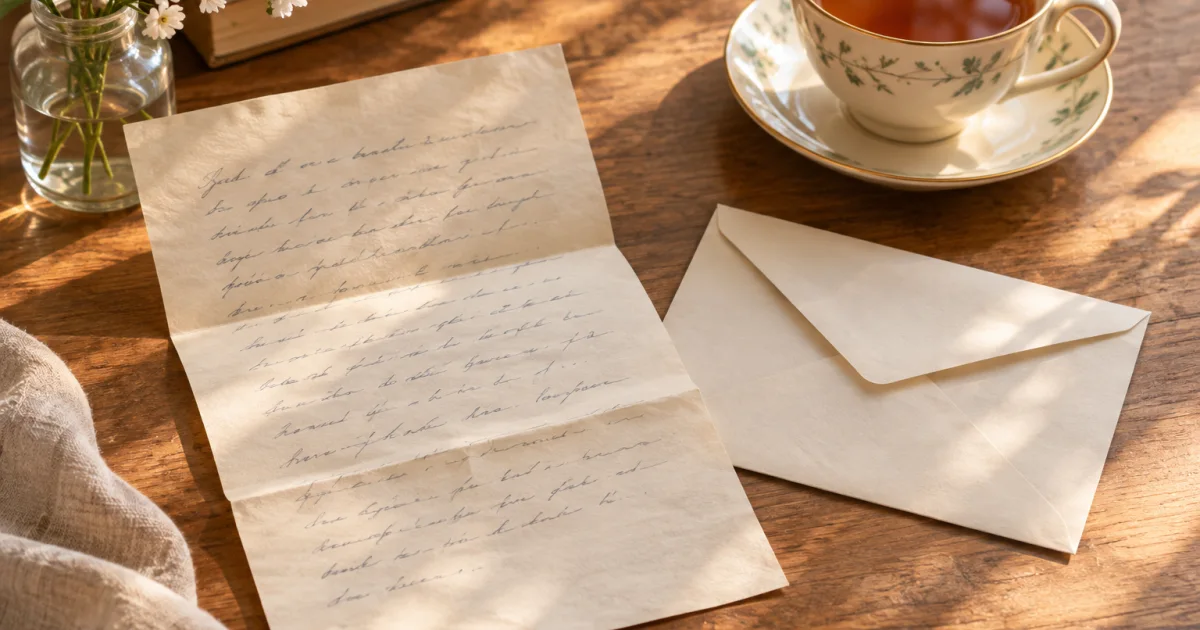
Even an envelope can show a name or ZIP code. Zoom in on your photo and decide what needs covering.
Try a short note
Fictional example: “November 15: a letter from Mom. She gave it to me when we met for the first time in a while that weekend. It was lovely to read about having tea together.” If the date is uncertain, you can write “around November.”
If you want to quote the letter, use only a short passage the writer agreed to share. Otherwise, describe the context in your own words, such as “a note of encouragement.”
Keep private parts private
You might photograph the back of the envelope or only a portion where the words cannot be read. Before recording a photo or note, leave out information the writer does not want included.
There is no need to post it where everyone can see it. If the writer prefers, you can keep only your own memory of receiving it, without a letter photo, even in a personal record.
Gather letter memories in Pogaem
If you know the receipt date, add the permitted photo and note to that date in your personal calendar. If not, use the actual date you make the entry and note the estimated receipt period separately. For a shared calendar, check the writer’s consent, participant permissions and internet connection.
Frequently asked questions
Do I need to photograph the entire letter?
No. You can keep just an envelope or a part you want to remember.
What if I do not know the exact date?
Write the month or period you remember and mark it as an estimate.
Can I show the photo to family?
Ask the letter writer first and cover private information.