Separate the usual recipe from the dish made that day
A familiar family dish may use different ingredients or quantities on different occasions. Go beyond a title such as “Mom's vegetable dish”: record who showed you, what they made, and the date you learned it. Distinguish a description of their usual method from the particular preparation you watched. Both can belong in the notes, provided you can tell which each sentence describes.
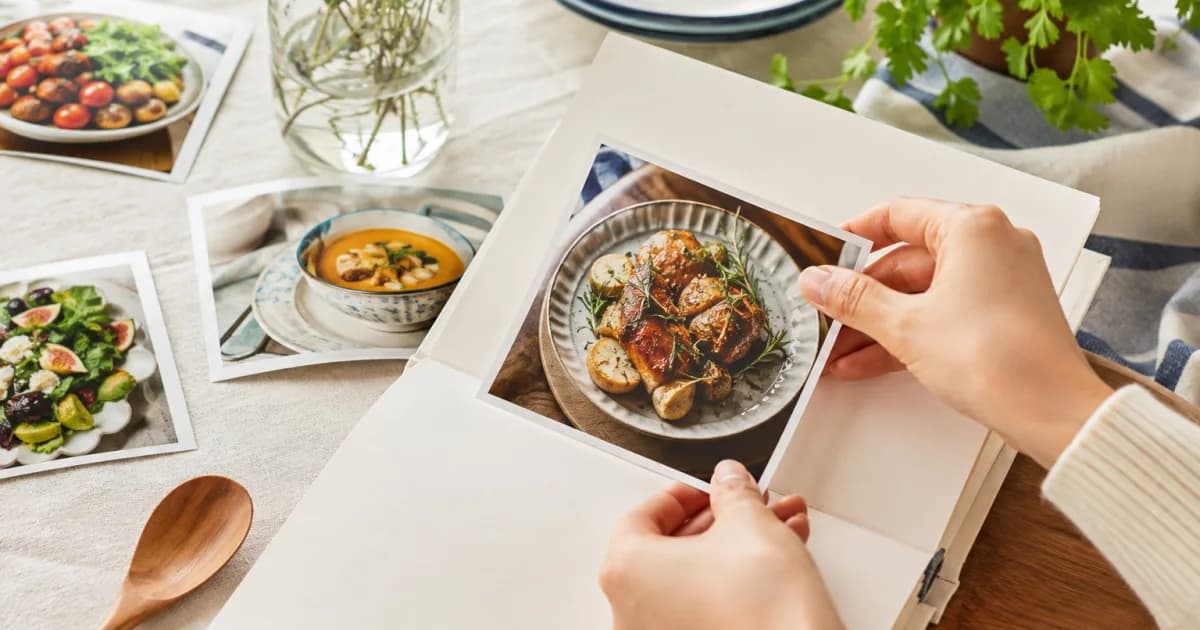
A finished-dish photograph does not mean you witnessed every step. If some preparation happened before you arrived, leave a question about that part. A family member's older recollection or an explanation passed on by someone else can also be worth preserving, but identify it as such. Do not quietly join those accounts to today's observed steps as though you saw the whole process yourself.
Ask which spoon, cup, or handful they mean
An invented editorial question is “When you said one spoonful, did you mean a level spoonful with this spoon?” Photograph the actual spoon or cup, then write the answer you received. If no one weighed the ingredient, leave its weight unknown. A photo of a household spoon is a reminder of the tool, not enough information to convert its contents into grams or a standard tablespoon.
For “just enough,” ask what they looked for and at which stage they stopped adding the ingredient. A note such as “Mixed it, checked again, then added more” can preserve an action you actually saw. If the amount or stopping point remains unclear, keep it as a question for next time. There is no need to rewrite an uncertain family explanation into a supposedly universal cooking rule.
Turn one demonstration into notes you can revisit
Record the cook, dish, demonstration date, and the scope of the preparation you watched that day.
Choose useful preparation, intermediate, or finished photos, adding questions wherever a step is missing.
Ask about unclear tools, amounts, and order, distinguishing what you observed from what the cook explained.
Give your own later attempt a separate dated entry, connecting changes you made with questions still to ask.
Make the gaps between photos visible
An editorial note format is “Lesson: watched from the point the vegetables went in / did not see whether the seasoning was mixed beforehand / question: did you mix it separately first?” If you later receive an answer, add “Confirmed through explanation.” That tells your future self which part came from a conversation. Avoid filling the gap with something you remember doing in a different recipe.
If you did not time a step, record the sequence and actions you confirmed rather than supplying a number of minutes. Descriptions of heat or appearance should retain the context in which the cook used them that day. These notes preserve the demonstration and its remaining questions. They do not establish safe cooking conditions or how long the food can be stored, which require separate appropriate guidance.
Keep your changes in the entry for your own attempt
If you use different tools or ingredients, write something like “My attempt: smaller saucepan; left out one ingredient.” Do not describe the outcome as the result of the exact method your family member demonstrated. Separate the original explanation, what you actually did, and your own impression after eating it. That leaves a useful account of this attempt without changing the record of the lesson.
When the result differs, look first for differences you have not yet checked rather than correcting the family recipe as wrong. A later answer can be added with the date and the person who supplied it. The new explanation may inform your next attempt, but it does not change what you did previously. Keep both occasions readable so the next question has a clear starting point.
Keep the demonstration and follow-up questions together
If family members agree, collect demonstration photos and notes in a Pogaem shared calendar and continue the questions in comments. Repeat the dish name in titles while labeling the entries “Lesson” and “My attempt,” for example. Short, familiar sentences make the notes accessible to the person who showed you the dish too. Their additional explanation can stay beside the question that prompted it.
You write and check these notes yourself; Pogaem does not calculate a recipe or extract ingredients and quantities from photographs. Ask the cook where something still needs clarification. If you later share the material outside the family calendar, agree first on which photos, stories, and contributions may be shown. Keeping a household recipe record does not require making every part of the family's conversation public.
Frequently asked questions
Do I need to convert every amount into a weight?
No. Keep the actual utensil and the quantity you confirmed. An unanswered question is clearer than an invented weight for an amount no one measured.
Can I make these notes without process photos?
Yes. Distinguish the steps someone explained from the parts you saw. Mark missing steps and leave questions you can check another time.
How should I record a different result when I try the family recipe?
Write down the tools, ingredients, and actions you used, along with differences you have not checked. Preserve the original demonstration and connect your attempt as a separate dated entry.