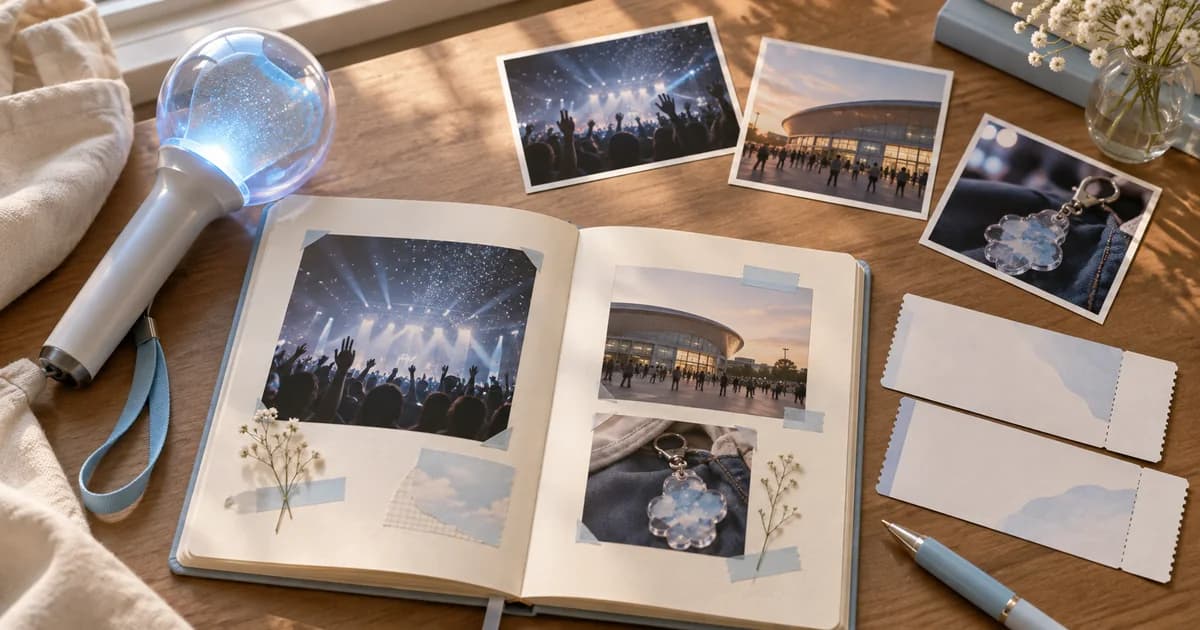
Start with that show’s stage and your actual position
The same venue can have a different stage orientation, screen layout, and equipment arrangement for each event. Identify the concert and the date and performance you actually attended, then add the section and row you confirmed. Keep a specific seat number only as far as your personal record needs it. If your memory is uncertain, record just the section you know.
If your booked seat differed from the position staff actually directed you to, distinguish the two. An official layout describes that event’s arrangement; your note describes the position from which you watched. Do not fill gaps using another event’s map or someone else’s photographs.
Separate the view of the stage from scenes seen on screens
If you could see movement on stage but watched faces on a screen, describe those experiences separately. “Far left of the stage hidden behind a structure / watched the screen on the right” says what you saw and where. It gives you more to revisit than a single sentence saying the view was good.
If the view changed between sitting and standing in accordance with event instructions, add that state. Do not move to another seat or block nearby audience members to check the view. When the cause of an obstruction is unclear, you can write “Part of the view ahead was blocked; cause unconfirmed.”
A photograph captures one moment of a longer experience
A zoomed phone photo does not reproduce the sense of distance you had with the naked eye. Note zoom or cropping if you remember it; otherwise leave the settings unconfirmed. A stage area missing from one photograph does not mean you could not see it throughout the concert.
A fictional editorial note is “Show A, evening performance; confirmed middle row of section B / seated: center stage visible, part of the left side obscured / watched faces on the screen / photo taken with zoom; magnification unconfirmed.” This illustrates a personal record, not a rating or recommended ranking of real venue seats.
Record the conditions at the position you watched from
Identify the concert, actual attendance date and performance, and confirmed seat or position.
Distinguish what you saw on stage and on screens while sitting or standing at that time.
Note the obscured area and when you observed it. If you have a permitted photo, add whether it was zoomed or cropped.
When adding memories later, distinguish your original notes from later interpretation, and begin a new entry for the next concert.
Distinguish fixed obstructions from brief interruptions
If you directly identified a pillar or piece of equipment, say which area it obscured. If a passing person or raised object blocked the view briefly, describe that moment. You can write “View ahead obscured during part of one song” without identifying another audience member in a photograph or description.
A sightline at one performance does not guarantee the same view at the next. Keep the old note as a reference to your own experience and check the new event’s latest guidance for a new booking decision. Do not infer the meaning of a restricted-view designation, seat-change conditions, or refund terms from a personal account.
Write about a position even when photography is not allowed
Follow that show’s photography instructions and write afterward when no permitted photo is available. A permitted exterior photo may help identify the visit, but do not describe it as the view from the audience. If you include a ticket photo, first inspect QR codes, barcodes, and transaction details for anything to conceal.
Pogaem photos, titles, and notes can bring together the performance details and your sightline observations. This does not describe automatic analysis of seat views or ranking of good seats. Write the details yourself so reopening the entry tells you which concert, position, and visible areas the note concerns.
Frequently asked questions
Can a zoomed photo stand for the actual view from my seat?
Note zoom or cropping and describe your impression with the naked eye separately. If magnification is unknown, mark it unconfirmed. The photograph alone cannot replace your account of distance and visible areas.
Can I make seat view notes for a show that prohibits photos?
Yes. Write afterward and follow that show’s photography instructions. Do not take secret photos or go to a different seat to create a view photo for the record.
Will the same seat give me the same view at the next concert?
The stage, equipment, screens, and viewing conditions can change. Keep the previous note as an account of that occasion and check the next event’s official information afresh.