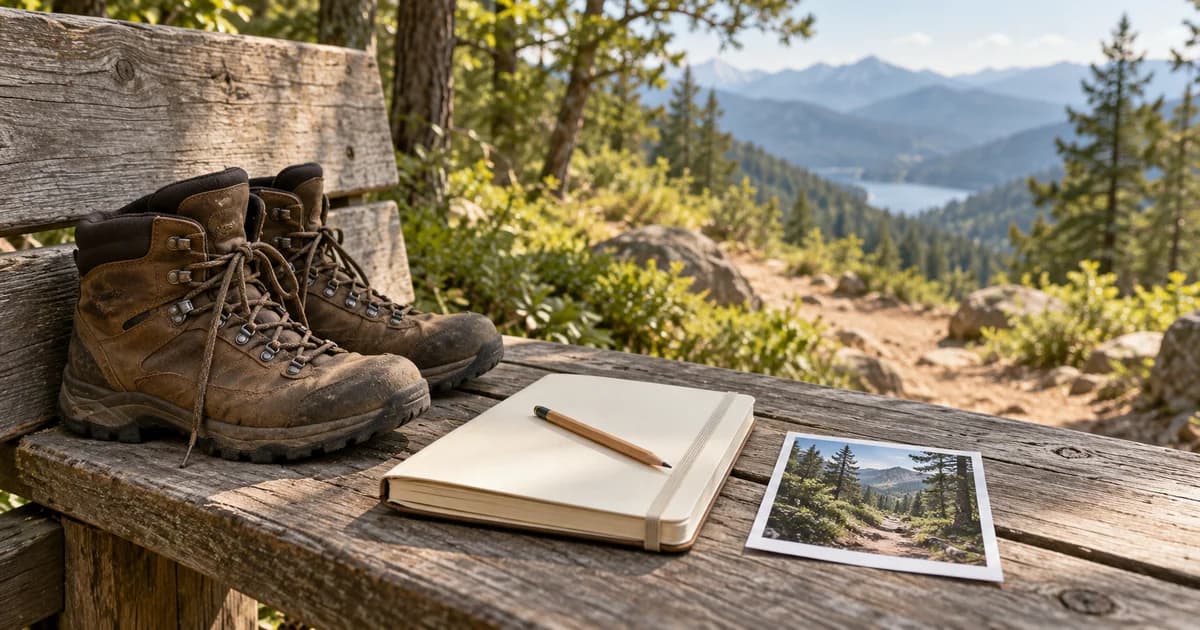
Keep the lived-in experience beside the tidy setup
A photo taken just after setting up can show the tent entrance, table, and chairs clearly. A later photo or note can reveal which parts you actually used. The first neat arrangement does not tell you whether it remained comfortable throughout the stay; that comes from what you experienced afterward.
Choose one area you want to look back on, such as the space between your chair and bag or beside the table. You do not have to review the entire campground. Your own small part of the site is enough, without closely recording neighboring tents or other people’s movements.
Describe where things were and what you did around them
In an invented editorial example, the first photo looks out from the tent entrance toward a table, a chair beside it, and a personal bag behind the chair. The note reads: “I was reading in the chair. When I wanted my cup, I stood up and went around to the bag behind me.” The action explains how that arrangement met everyday life.
The same position can feel different while reading and while clearing up after a meal. You might write, “The chair was a good spot for reading, but the things I kept reaching for in my bag felt far away.” Keep the situation attached to the impression, without making one stay into a layout rule for everyone.
Connect a change to what happened afterward
If you moved your bag, say when and describe what changed in use. “After reading, I moved the bag beside me. I no longer went behind the chair to get my cup” records a specific experience. It does not imply that every other part of the setup improved too.
A change you did not photograph can remain in writing. Avoid rebuilding a similar arrangement at home and presenting that photo as the original campsite. If a daytime photo accompanies something you noticed at night, identify the two moments so the image is not asked to show an experience it never captured.
Turn a setup photo into a camping journal in four steps
Choose part of the place where you actually stayed and keep a photo or description of its initial arrangement.
Describe an action there and a particular moment that felt convenient or awkward.
If you moved something during the stay, connect its old and new positions with what changed in use.
Read the entry afterward and leave one question you want to explore in your next personal setup.
Leave one question grounded in the stay
The fictional example could leave this question: “Next time, what would it be like to keep my often-used cup somewhere closer to my chair?” That question comes from a movement you remember, without requiring a list of new things to buy. Consider whether you expect to spend time in the same way next time.
A position you liked before is not automatically right for a different site. Check the current site rules and actual conditions separately. This is a way to record how you used a space, not instructions for pitching tents, building fires, or installing electrical equipment, or proof of a safe position or current facilities.
Keep the arrangement and experience on their actual dates
In a Pogaem personal calendar, keep your setup photo and account on the camping date. A title such as “The day I moved the bag beside my chair” can identify the first arrangement, the change, and your later question. For a stay lasting several days, distinguish the dates on which changes happened.
After another camping trip, add that stay’s photos and experiences and return to the earlier question. If someone sends you a photo, note who took it and when as far as you know. You are joining up your own everyday scenes, rather than asking the app to design a layout or check equipment.
Frequently asked questions
Do I need to list every item of camping gear?
Choose the objects and positions needed to understand how you used the space. If you also want a packing checklist, keep that separate from the account of the stay.
What can I add when I only have one setup photo?
Describe one action, such as getting your cup or sitting down to read. A later difficulty or change can be added in words, with its timing made clear.
Can I repeat the same setup next time?
Treat the entry as a record of your earlier experience and check the next site’s rules and actual conditions separately. A past photo does not confirm that an arrangement is suitable or safe now.