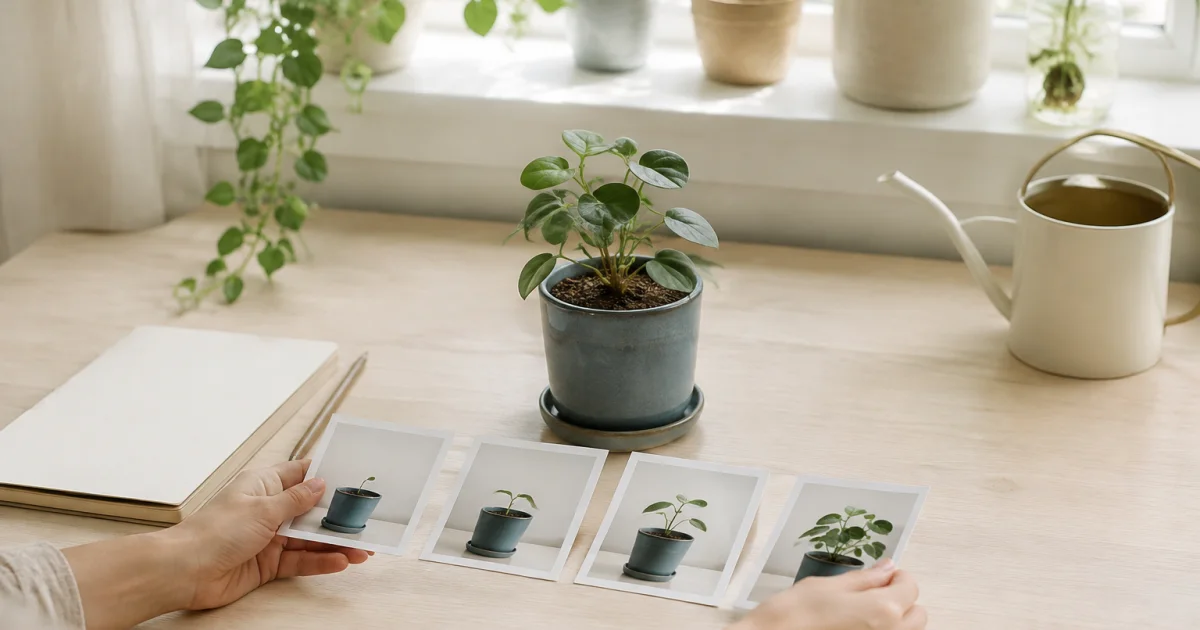
Record the light you can see
To keep a window light photo log, choose one spot and photograph the edge of the sunlight and any shadows you can see. Note the time, cloud cover and whether the curtains were open so you can distinguish this scene from another.
Light changes with the weather, season, nearby buildings and curtains. A single bright-looking photo cannot tell you how much light a plant receives or whether it is healthy.
Look at the same spot three times
Choose a recognizable marker on the floor beside the window so you can find the spot again.
When you can, take a photo from the same direction in the morning, around midday and in the afternoon. Write down each time.
Describe the visible edge of the sunlight, the shadows, the weather and the curtain position as you observed them.
Leave times you did not see blank, and observe again on another day if needed.
Leave unobserved hours open
Here is a fictional editorial example: “9:00 a.m. Clear, curtains open, sunlight on two tiles beside the window.” If you did not look at noon, write “12:00 p.m. Not observed.”
If your 3:00 p.m. note says “Cloudy, curtains open, no clear edge visible,” do not assume it looked that way all afternoon. Each note describes only the moment you checked.
What to consider when comparing days
Automatic exposure or a different camera angle can make the photo look brighter or darker than the scene appeared to your eye. Compare the framing with your observation notes and mark any reason the pictures differ.
The University of Saskatchewan’s guide to window light also explains that incoming light can vary with the direction a window faces. Check your own spot rather than applying its stated conditions to every hour in your home.
Keep photos and observations together in Pogaem
Add a photo and a short note yourself to a personal calendar in Pogaem, such as “9 a.m. clear · curtains open · light on two floor tiles.” When you revisit the spot on another day, you can find each observation by date.
Check a plant-specific guide separately for its care requirements. This log gathers what you observed; it does not measure light automatically or diagnose a plant.
Frequently asked questions
Is one photo enough?
Yes. Label it as the scene you saw at that time and leave the light at other hours unconfirmed.
Are cloudy-day photos useful?
Yes. Notes about clouds and curtains help distinguish that observation from a sunny day. Two photos cannot tell you what happens in every season.
Will Pogaem tell me where to put a plant?
This guide uses photos and notes you write yourself. Consult separate plant-specific information about placement and light needs.
Sources
- University of Saskatchewan Gardening: Window Light · Accessed: 2026-11-10