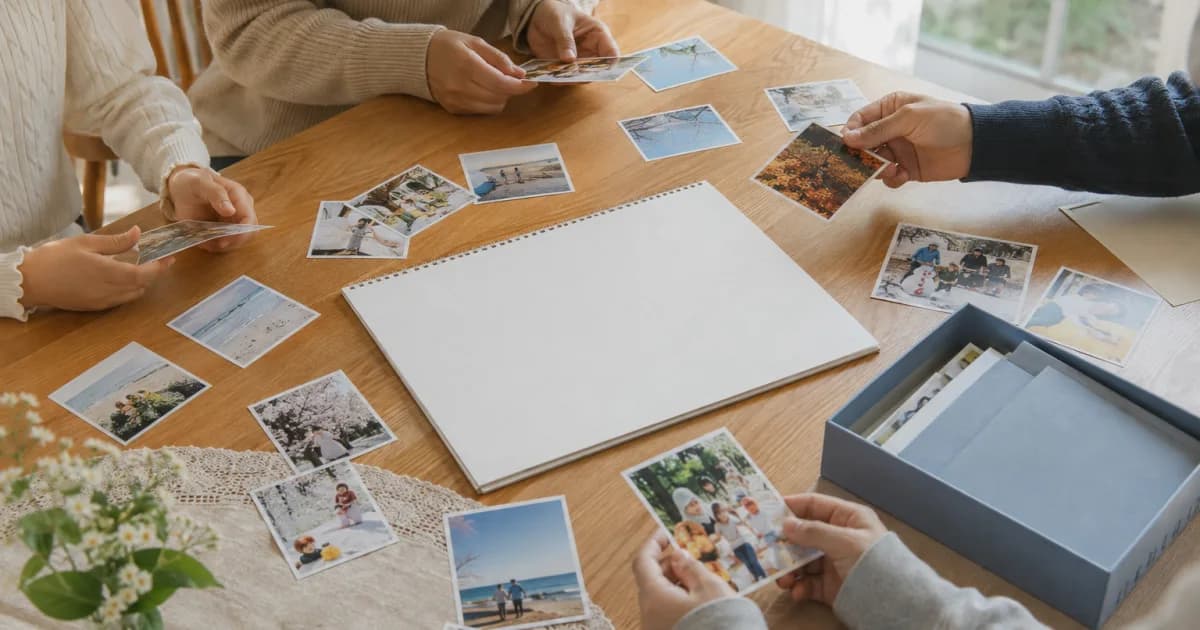
Choose a picture you want to revisit together
Look through an old photo together and ask what you would enjoy trying again. It could be the order in which people sat or a gesture everyone made with their hands. Explain the picture you have in mind and where you want to keep it, so anyone who wants to participate can do so comfortably.
Everyone in the old picture may not be available today. You do not have to fill every space or insist on identical clothes and expressions. Start with the people and place available now, and choose one visible element you would like to carry into the new photograph.
Decide which gesture to keep and which setting to change
In this invented editorial example, an old photo shows two siblings sitting on a low sofa, each resting their cheeks in their hands. They want to try the gesture again, but cannot visit their former home. They choose dining chairs in their current home without trying to match the old sofa's height.
Check that the gesture feels comfortable now, and change any awkward position. Choosing one element to repeat does not mean holding the old pose throughout the session. If someone starts laughing differently or puts their hands down first, you can choose that moment as the picture of today.
Give each picture a caption of its own
The caption for the old image in the fictional example could read: "Childhood, on the sofa in our old home. The two of us are sitting side by side with our cheeks in our hands. Year unknown." It describes the visible setting and gesture without filling the missing year with today's date.
The new caption might say: "Today we tried the same gesture on dining chairs at home. This time both our feet reach the floor, and we started laughing before the photo was taken. The sofa is gone, but we kept our places beside each other." Differences can stay in the picture and still leave a clear connection.
Keep the old and new photographs as one story
Choose an old photo with the people who want to take part, and agree on one arrangement or gesture to repeat.
Take a new picture comfortably in a place available today, leaving room for the differences.
Write a separate caption for each photograph, connecting the elements you kept and the things that changed.
Keep the pictures and explanation on the new photograph's date, stating only what you know about the old date.
Let the changes explain what you chose today
If the original place is unavailable, you can use the place where you meet now. "We could not return to the old house, so we took this in the living room today" explains the change. Someone who does not want to repeat a pose can choose another position or sit out the photograph.
Separate your memories of the old scene from what the image visibly shows. Taking a new photograph does not confirm how everyone felt years ago. Finish with what you agreed on and what you actually photographed this time.
Add your own words to help read the two images
In a Pogaem personal calendar, add the new photo and an old image you are entitled to keep to today's date. Label the captions "Old photo" and "Today's photo" in the body so each description has a clear subject. Leave an unknown historical date unknown and distinguish it from the date of the new picture.
Open the entry to read the photos and words together and see what you repeated and changed. These are two photographs people actually took; the app has not altered faces or rearranged a scene to recreate the past. If you show them to anyone else, follow the sharing boundaries agreed with the people pictured.
Frequently asked questions
What if we cannot take the picture in the original house?
Choose a place where you can meet today and keep one arrangement or gesture. Explain why the setting changed and describe the new scene in its own caption.
Can we do this without knowing the exact date of the old photo?
Give only the historical date information you know, or write that it is unknown. Keep it distinct from the day you took the new picture, so storing the pair together does not imply they were both photographed today.
Must we match the old expressions and poses?
Choose positions everyone taking part finds comfortable. A changed gesture and the reason for it can belong in today's story. Anyone who does not want to take part can skip the photograph.