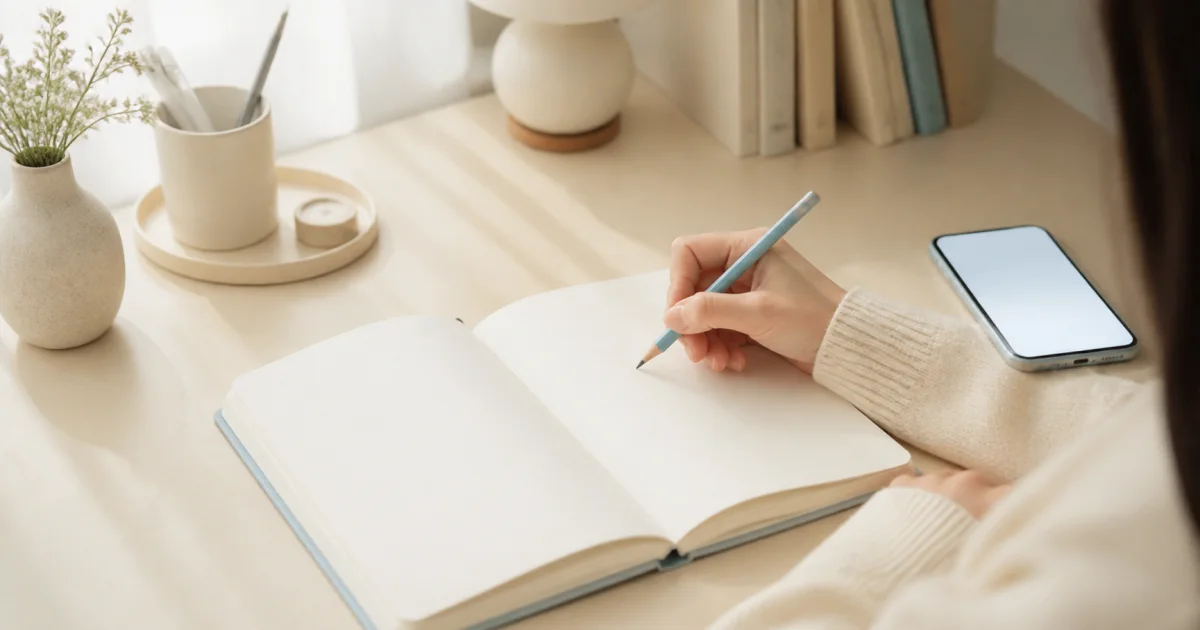
Let the untidy first words stay
You might wake with a list of things to do, or with nothing you can put into words. Write a sentence about that state. "What am I supposed to write today?" can be a beginning. Instead of organizing a topic first, put down the words that occur to you and see what follows.
When you notice a spelling error or an awkward sentence order, you can pass it by for this piece. If your thoughts move elsewhere, follow those words. A polished morning greeting or a resolution for the day does not have to come first.
Read a short piece as its thoughts move around
Here is a complete, deliberately unpolished freewriting example created by the editorial team. It is neither a real user's diary nor a model of one prescribed writing method. The thought of having nothing to say moves through a sound, a cup, and something to buy.
"Still don't know what to write. A car goes past outside was that the same sound a minute ago. I should get some water but where's the cup. Probably next to the desk from yesterday. Desk makes me think of that notebook I bought and never opened. Do I really need to save all the paper just write here today. Oh there's no milk. Hope I remember when I go out but for now I'm only writing milk."
Follow the first words into the next thought
Write the words that occur to you, including the thought that you have nothing to write.
Follow whatever those words bring to mind without correcting the sequence or expression as you go.
If the thought stops, write that or pause; continue if another phrase comes.
Finish where you want to stop and keep what you wrote with today's date.
The next sentence can take a different direction
The example might continue: "There's a tree on the way to get milk. Haven't looked at its leaves lately." You can let that follow without checking whether it logically belongs with the previous sentences. If nothing follows, stopping at "milk" still leaves a complete piece of writing for today.
When a thought repeats, you could write "Thinking about that cup again." An awkward sentence can stay as it is for this piece. You may choose to develop another version later, but the flow you just wrote does not have to be corrected first.
Leave the length and the outcome open
Some mornings produce a sentence or two; others leave you with a longer piece. This suggestion sets no page count or writing duration. It is not a requirement to follow a particular named routine exactly. Choose how much to write and where to stop in your own circumstances.
You might feel much the same afterward, or have no wish to reread the entry. You can keep it without assessing the prose or checking whether your mind feels clearer. There is no need to turn this morning writing into a test of therapeutic benefit or productivity.
Save the words even when there is no photo
In a Pogaem personal calendar, give today's entry a title such as "Words from this morning" and add the text you wrote. A title or text lets you save an entry without a photo. If choosing a picture would interrupt the first thought, begin with the words.
You can return to dated entries to see where each piece began, or leave them unread. You choose when to continue and when to stop. There is no need to stretch the content to make every entry the same length.
Frequently asked questions
Does morning freewriting require several handwritten pages?
This suggestion has no required tool or page count. You can write briefly on your phone and stop when you choose. It is not an account of the formal steps of a particular named method.
Should I return to the topic whenever my thoughts wander?
If words are leading somewhere else, you can follow them. The entry does not need a single topic or a logical conclusion; keep it up to the place where you stopped.
Do I need to reread and correct the writing immediately?
You can keep the flow as written and choose not to reread it. Developing a different piece later is optional, and does not require correcting the original entry.