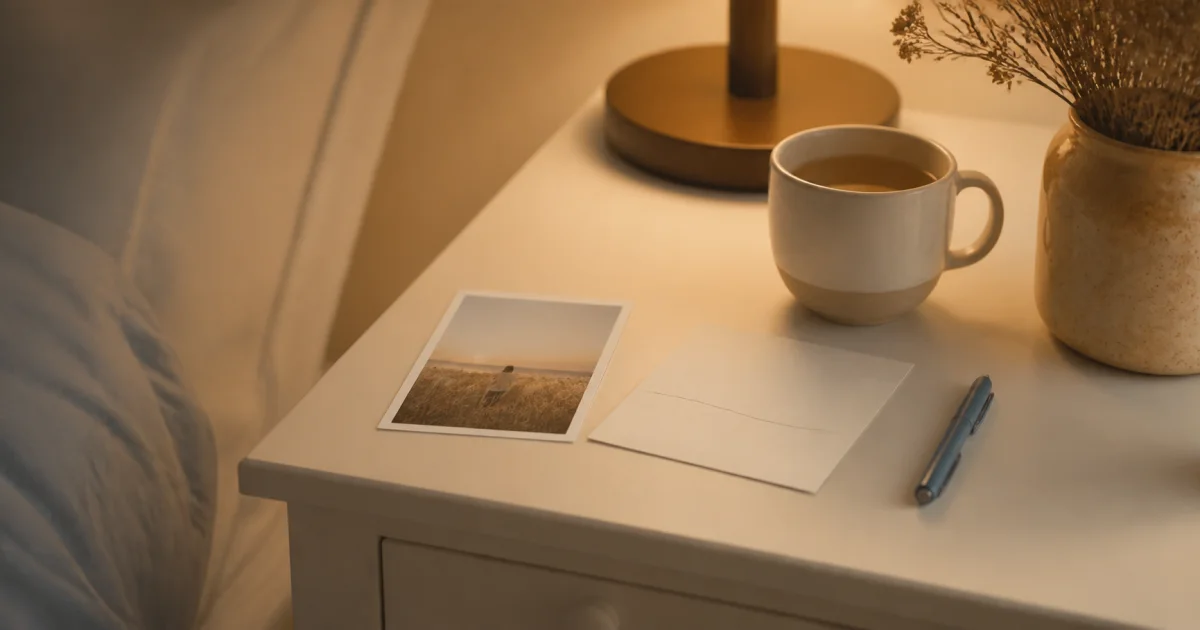
Go beyond the room name to a place you occupied
"The small room" may say little about the days you spent there. Choose the end of the desk below the window, the kitchen doorway, or the right-hand side of the sofa: somewhere your body often came to rest. Beside its photo, write what you repeatedly did in that spot.
You do not need a beautiful photograph or the same number of pictures of every room. A familiar cup mark or the direction of a chair can begin the story. Think about how you lived around those details, leaving their next location for another kind of moving note.
Write one familiar spot into a short memory passage
Choose one place you often occupied in the home you are leaving, and photograph it as it is now.
Write about something you actually did there or an ordinary scene that often repeated.
Add one remembered sound or habit that the photograph cannot show.
Keep the picture and writing on the date of the entry, finishing in words you will recognize later.
Let a sound beyond the frame enter the memory
This invented editorial scene concerns a desk below the window of a small room. The photo shows an empty desktop, a chair, and a faint mark on the wall. The writing follows the ordinary evenings that happened there, bringing the writer's actions into the passage as well as the visible objects.
An original fictional passage might read: "After work, I used to turn this chair a little toward the window. The desk made a short hollow sound whenever I put my cup on the corner. When I heard the shop opposite pull its shutter down, I finally switched on the light. The desk is empty today, but I keep looking for the place to set my cup. In this room, evening began with that sound."
Let other people speak for their own memories
A room you remember as quiet may seem lively in someone else's memory. You could have spent different hours in different corners of the same home. Write "I remember this sound" and keep your experience in your own voice, without fitting everyone's feelings into one family account.
If a housemate wants to contribute a story, ask which words and photographs they are comfortable keeping together. They can skip a scene they do not want to discuss. Completing your own entry does not require everyone to share the same memory.
An emptied room can still hold the start of a story
After the furniture has gone, photograph the space and add something like, "My chair was here, facing the door." If you have an older picture, distinguish how the room looked then from how it looks now. Describe missing belongings as memories rather than things visible in the new photograph.
If a sound is uncertain, you could write, "I remember a shop closing each evening, but I do not know which shop it was." A memory does not have to be perfectly clear before you can record it. Keeping the present view distinct from the life you recall gives even an empty room a story.
Keep the room photo with the life you describe
Add the picture to the date you make the entry in a Pogaem personal calendar, with a recognizable title such as "Evenings by the small-room window." Connect the visible place and the life you remember in the body. You can explain that you are looking back today even when you do not know the exact dates of a repeated habit.
Return through the album or a dated entry to see the photo and read your words. Before photographing or sharing, check for home addresses, access information, and a housemate's private belongings. One scene of the life you lived can be enough to keep, without recording the entire space.
Frequently asked questions
Should I tidy the whole room before photographing it?
The spot only needs to be recognizable to you. Rather than staging a beautiful room, write what you actually did there and add a detail outside the photograph.
Can I make this entry after everything has been packed?
Use the empty space to describe how you lived there. If you have an older photo, distinguish the past view from the present one. Otherwise, add only the details you remember in words.
How is this different from a moving-box photo record?
This entry keeps a lived experience rather than directions for finding belongings. A desk photo might lead to the direction you used to sit and the sound you heard, instead of which box holds the desk items.