Take a full view and a detail shot before bag drop
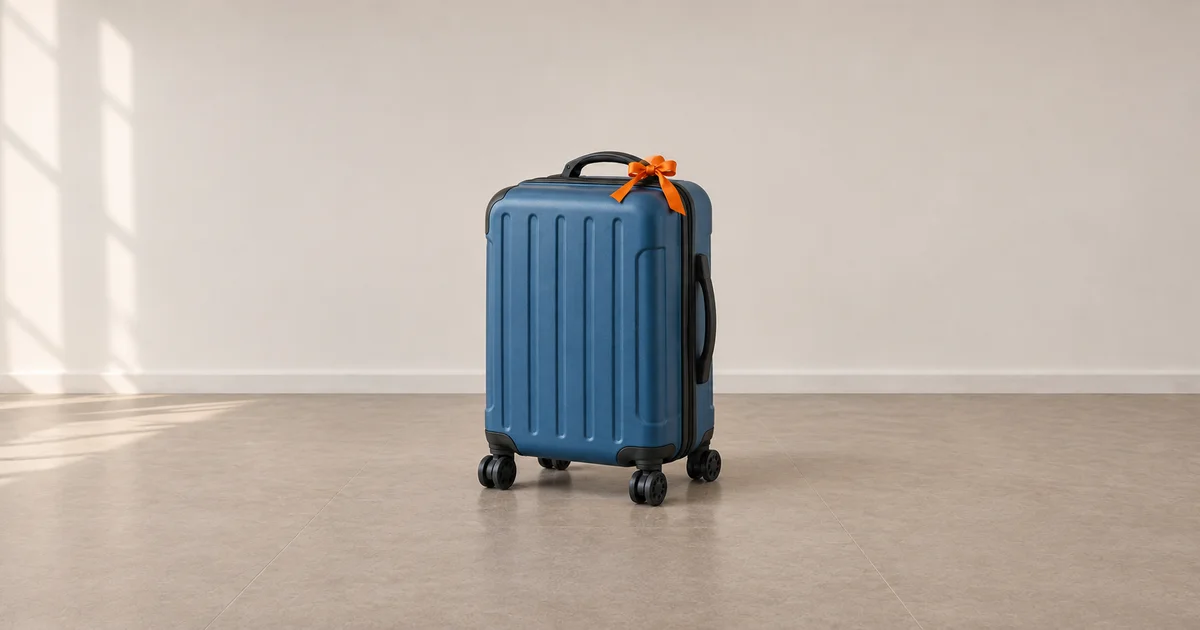
Stand the case upright and photograph its front from handle to wheels. Take a second picture of something you would recognize up close. Write down the kind of bag it is, its color, and where the detail sits. You can then describe it even when you can’t hand someone your phone.
If two cases look alike, stand them side by side. Is there a pocket, scrape or seam on just one of them? Find something more specific than a telescoping handle. Turn any address label away from the lens.
Choose three clues someone else could check
Shape and surface. Add something visible to “blue suitcase,” such as “hard shell with vertical ridges across the front.” If you don’t know the material, stick to what you can see.
Location of a mark. “A scuff above the bottom right wheel, looking at the front” gives the other person a side and a landmark. “It’s scratched” gives them a whole suitcase to search.
Another angle. If the front looks like half the bags on the belt, check the side handle or the shape of the back panel for one more detail you recognize.
Write a description you could read at the counter
An invented example from the editors reads, “Facing the front, you’ll see a navy hard-shell rolling case with vertical ridges and a white crescent-shaped scrape in the lower right corner.” One photo shows the shape of the case. The other shows the scrape and enough of the corner to locate it.
A second navy case on the same trip might get a different line, such as “fabric front pocket with a horizontal zipper.” Bag type, color and distinctive features are also among the details in the International Air Transport Association’s baggage identification chart.
File the check-in receipt separately
Keep the airline’s bag receipt with travel papers you can reach. Leave names, booking references and barcodes out of the appearance note. That way you can show a companion the case itself without showing them the identifying details on your receipt.
If your checked bag doesn’t arrive, contact the airline’s baggage service and follow its instructions. Some airlines distinguish the receipt issued at check-in from a reference issued after a report. JAL’s international baggage tracer is one example. Bring up your photos when you need to describe the bag.
Refresh the note when the case changes
You can keep the exterior photos and description together in Pogaem under the travel date. Before the next trip, take a new detail shot if you have replaced the handle cover or peeled off the sticker you used to recognize.
Frequently asked questions
Should I take the photos at the airport?
At home is fine if the case looks the way it will at bag drop. If you check it with a cover on, include a photo with the cover in place.
What if the suitcase is brand-new?
Look for a pocket, zipper direction, molded pattern or wheel color. You don’t need to add a mark to give the bag a description.
Can I track a suitcase with the picture?
The photo helps you describe what the case looks like. Your airline can tell you what it needs to file a report or check the bag’s status.
Sources
- IATA’s Baggage Identification Chart · Accessed: 2026-11-20
- JAL international baggage tracer and reference numbers · Accessed: 2026-11-20