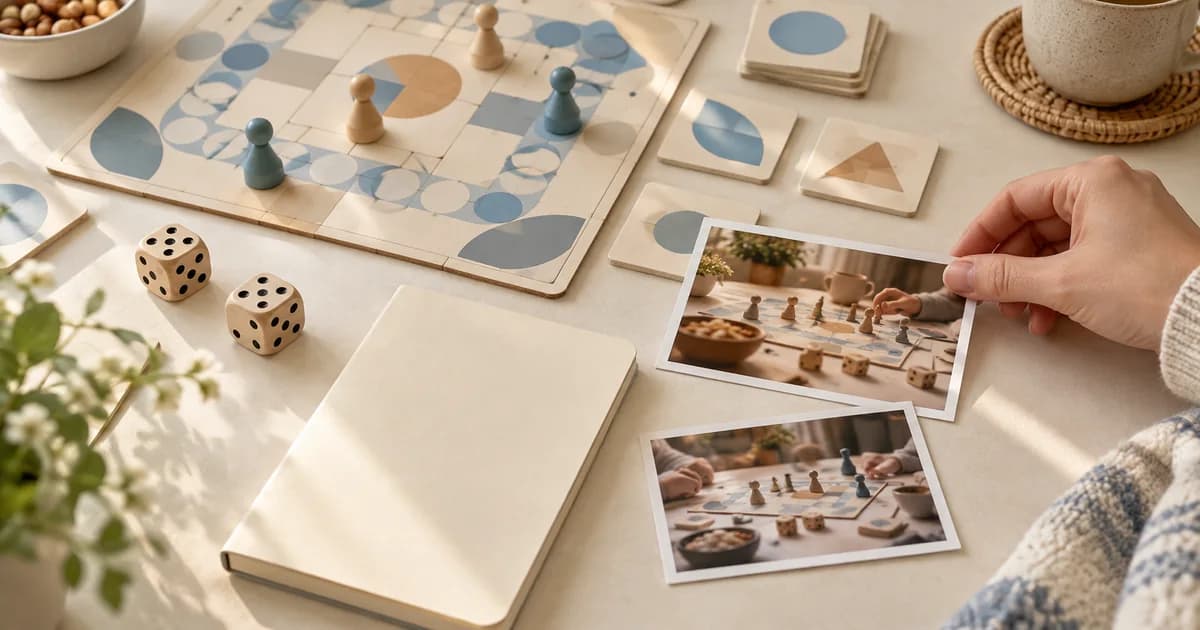
Identify the edition and which play you are recording
A photo alone may not remind you which expansion you used or whether this was a first learning play. Record the game name and the edition, language, or additional components you actually confirmed. If you are unsure of the edition, leave checking the box as an open item. You do not need to fill that gap with what another copy of the game looks like.
For several complete plays on the same day, add labels such as “First play” and “Second play after learning the rules.” These distinguish separate games, rather than rounds or turns within one game. You can make multiple entries on one date. Decide whether you want one gathering summary or separate play records by considering what you will want to find next time.
Separate the result, a memorable choice, and a rules question
Here is an editorial example that does not describe a particular game's rules: “Second play / remember changing my choice near the end / check the relevant rulebook section if this situation happens again.” If you want to include a score you confirmed, put it on a separate results line. That leaves the question visible without making it look like a settled part of the game's instructions.
Feeling that something worked well and establishing that it followed the rules are different questions. Do not turn “That choice felt useful to me” into a strategy recommendation for every player. Mark a rule you could not confirm during play as unresolved. Keep a temporary agreement among your group distinct from the official rules so the entry does not blur the two together.
Save one play's photos and questions
Agree on which photos participants are comfortable keeping, then make an entry for the date you actually met.
Record the game, the setup you confirmed, and which play it was, then select a table photo suitable for that audience.
Write one choice you remember and one question still to check, using your own words.
Before the next gathering, consult official guidance for that edition and add what you confirmed in a dated entry or comment.
When you resolve a rule, record where you found the answer
If you find an answer in the official rulebook or publisher's guidance, record the source, the relevant section, and the date you checked it. Keep your question and a short account of what you established instead of copying all the rules or component images into the diary. Also check that you are looking at guidance for the edition you actually played.
Do not present a temporary house rule as the official one. A label such as “Our agreement for this play” keeps its status clear when explaining the game to someone new. Pogaem preserves your photo and note; it does not decide whether a rule interpretation is correct or calculate the score. A resolved question still needs a source that you checked yourself.
Let friends add the moments they remember
If the group agrees to collect photos together, each person can add their own scenes and notes to a shared calendar. A comment such as “I remember that sequence a little differently” lets you explain your own recollection and discuss what to check together. One person's response to a game does not have to become the entire group's review or final opinion.
For a game where hidden cards or the ending matter, check the picture for details that should stay hidden from its intended audience. You can write an ending warning on the first line, but the app does not automatically conceal spoilers. Decide separately whether players' faces or real names can appear if you later share the entry or photo somewhere else.
Bring one question from the log to the next game night
After recording several plays, choose a decision to revisit or a rule to check before building a table of wins. A short question beside the photo can become the conversation that begins your next play. If your view has changed, add that later thought rather than replacing every earlier impression with the conclusion you hold now. Both belong to their own moment.
This journal is a record of games you took part in. It does not rely on automatic score aggregation, opponent statistics, or scheduling a gathering through the app. Instead of transcribing every move, leave a photo and note that will bring that particular play back when you open it again. The edition, your question, and the group's confirmed context are enough to begin.
Frequently asked questions
Does a board game journal need scores?
No. You can record identifying game details, which play it was, and a memorable choice or question. If you add a score, use a result you confirmed yourself rather than expecting automatic calculation.
How should I separate several plays on the same day?
Use labels such as first play and second play, or make separate entries on the same date. Include the edition or setup so you can distinguish them later. These labels refer to whole plays, not turns within one game.
Should I delete a note when I discover I remembered a rule incorrectly?
You can keep the unresolved note and add what you later confirmed. Identify the edition's official source and distinguish its rules from your group's own agreements.