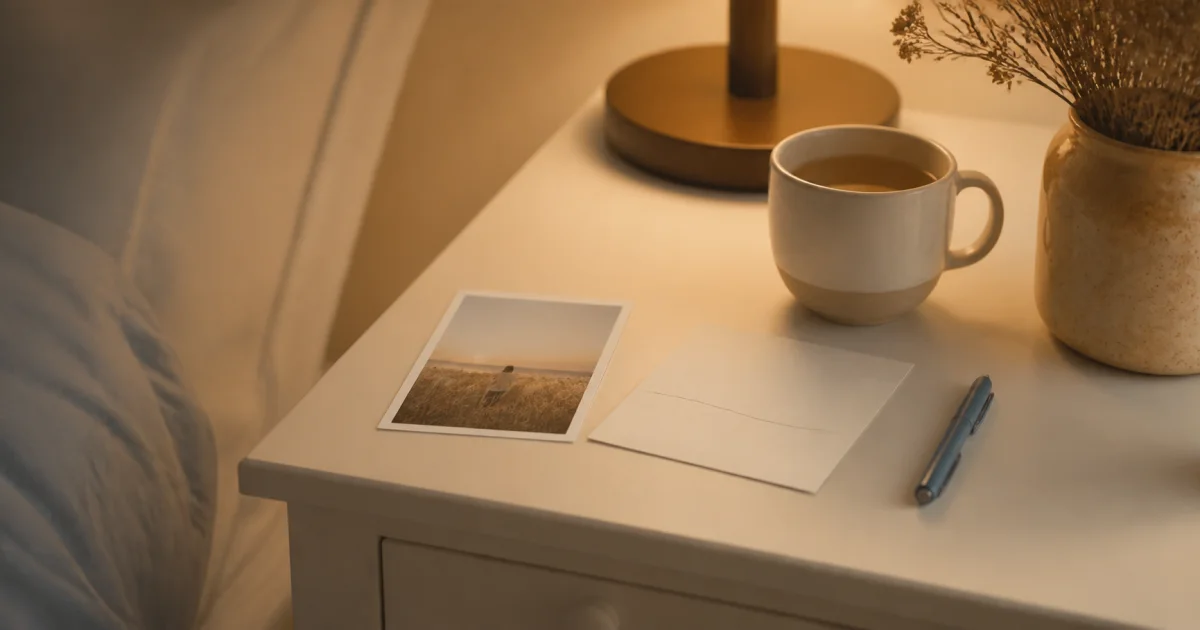
Let your evening journal begin when work ends
If journaling means writing down everything that happened at work, you may feel tired before you even open the page. Give your after-work journal a smaller scope: the time when your evening becomes your own again. The lamp you switched on, the spot where you took off your shoes, or a late bowl of dinner can all give you a starting point.
You do not need to prove what you accomplished or decide whether the whole day was good or bad. If you got home later than usual, that fact alone can be the entry. The sentences below are editorial examples to help you begin; they are not a standard for how a productive, relaxing, or worthwhile evening ought to look.
Pair one recognizable scene with one sentence
A photo only needs to help you recognize this particular day. Try adding the reason behind it: “The table after the dishes were done / I sat here for a while without doing anything.” You do not have to tidy the room or arrange dinner attractively before your evening is ready to record. The ordinary scene is enough if it is the one you want to remember.
If you cannot find a sentence, choose one prompt: “One thing I finished,” “The first thing I chose when I got home,” or “Something to remember tomorrow.” A photo of your bag could carry the note, “Put tomorrow's charger in as soon as I got back.” It is a small decision from today, even if there is no longer story you want to tell.
Add an evening entry in Pogaem
Create a personal calendar with a comfortable name such as “After work,” or use your existing everyday calendar.
Choose the date you want to record, add one photo, and write one sentence in your own words.
On a day without a photo, leave a text-only entry or skip the day.
If a recording reminder would help, choose days and times that fit your downtime without interrupting it.
After midnight, add a little context to your date choice
After a late shift or a long journey home, the date on the camera may not match what feels like the end of your day. When choosing the entry date, make your convention clear in a short note. “Home early Tuesday morning after Monday's shift” tells you what happened without leaving you to reconstruct the connection when you find the photo months later.
You do not need to edit every old entry to make all your dates consistent. Use the convention that works for you going forward and explain exceptions when they happen. Rather than expecting the photo's date to interpret your working hours or sleep schedule, add the small clue that will help you recognize the day you meant to record.
Choose photos that belong in your personal record
An after-work entry does not need a screenshot from work or a photo inside the workplace. Even in a personal journal, leave out scenes showing customer details or colleagues' names, and choose something that serves the entry's purpose, such as your own belongings after you get home. Follow any workplace rules that apply to what you may photograph or keep.
If you share an everyday calendar with someone, you can keep the notes you want to yourself in a separate personal record. Agree on a comfortable boundary for each of you. A shared or unshared evening does not need to become a measure of how interested someone is; choose what you want the other person to see and leave space for the rest.
Look for familiar scenes when you return to the week
After a few days, look back at the evening photos you kept. A cup that appears often or the same stretch of a walk may show you what you have been choosing lately. You do not have to turn that observation into a productivity or mood score. If the calendar lets you find one scene from last Tuesday again, it has given that day a place.
If you took a break, continue with today's photo. Browse evening scenes in Pogaem's album view or open a date to read the sentence you wrote at the time. The entry does not need to conclude that you ended the day well. Leave something you will recognize as today, then let the next entry happen when you have another scene to keep.
Frequently asked questions
What can I write when I am too tired to journal after work?
Choose one scene you can see and add a sentence about why you picked it. Without a photo, you can write a text-only entry or take the evening off from recording.
Which date should I use for an entry after a night shift?
Choose the date you will find most useful later and explain your convention, such as “Early morning after yesterday's shift.” The note connects the photo date with the working day you mean.
Do I need to fill in every missed day before restarting?
No. Start again today and add older entries only when you clearly remember them. Filling every blank date does not have to be a condition for continuing.